Shadowing the Marketing & Communication Working Group
A Fellowship Reflection from APAN62, Auckland
Mohammad Imam Hosen Sayem | BdREN | APAN62 Fellow
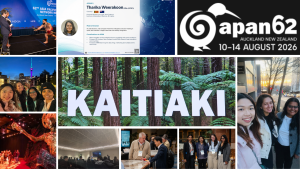
APAN62 · 10–14 August 2026 · Auckland, New Zealand · Hosted by REANNZ
APAN62 concluded successfully in Auckland, New Zealand, held from 10–14 August 2026 and hosted by the Research and Education Advanced Network New Zealand (REANNZ). Being selected as a Fellow from Bangladesh gave me access to a community that has worked relentlessly to strengthen the research and education landscape across the greater Asia-Pacific region. The APAN Fellowship offers exactly this kind of platform — an opportunity for Fellows to collaborate, learn, and build lasting professional relationships with peers from across the region.
Day One: Orientation and the Shadowing Assignment
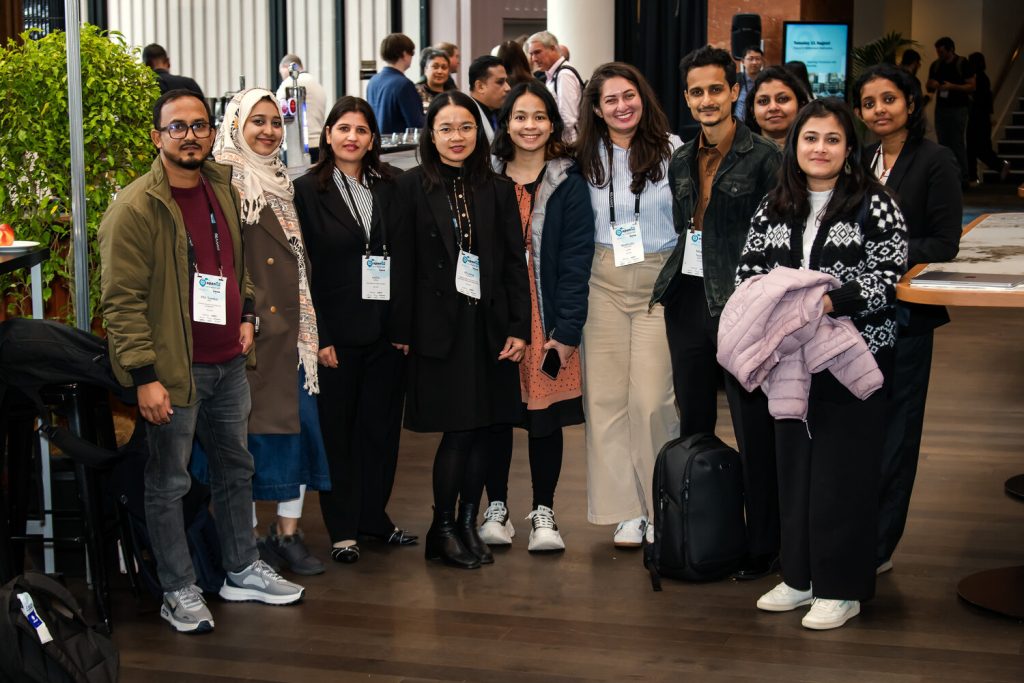
After a twenty-hour journey across the Pacific, the programme began with great enthusiasm at the Hotel Grand Millennium, Auckland. The APAN General Manager set the tone for the week, and the twenty Fellows from across the Asia-Pacific region followed suit. Each Fellow was assigned to shadow the Chair or Co-Chair of one of APAN’s working groups for the duration of the conference.
I was assigned to shadow Mr. Markus Buchhorn, founding Chair of the Marketing and Communication Special Interest Group, known within APAN as MarCom.
Building a Mentorship: Shadowing Mr. Markus
Following the first session, I looked for an opportunity to break the ice with my assigned Chair. That moment came over coffee, where Markus — quite literally — taught me how to eat a kiwifruit. It was a small, memorable start to what became a genuinely valuable mentorship.
Later that day, I sat down with him to learn more about his journey: how he founded the MarCom Special Interest Group, how APAN itself came to be, and how he curates presentation proposals and keeps the wider APAN community engaged with the group’s work. It was a rare opportunity to learn directly from someone who has helped shape how the APAN community communicates with itself.
Presenting at the MarCom SIG Session
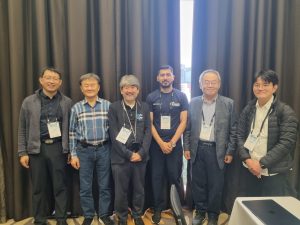
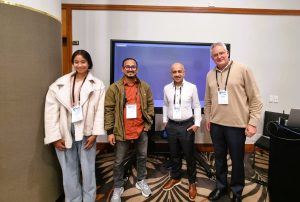
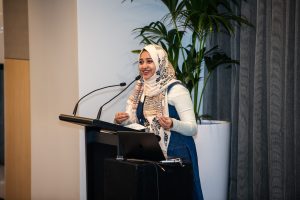
Beyond my role as a shadowing Fellow, I also submitted a presentation proposal to the MarCom SIG, which was accepted. The session was scheduled as the third session of the day, in the Coromandel breakout room, and was attended by the APAN General Manager (also Co-Chair of the group), the APAN Secretary, the CEO of host organisation REANNZ, and several other delegates.
The presenters were:
- Mohammad Imam Hosen, BdREN
- Khadizatul Kubra, BdREN
- Thy Boskovic, APNIC
- Jana Maker, REANNZ
Each presenter explored how their work could create value for the wider APAN community, and the session collectively surfaced a shared set of themes: co-creating value among RENs, ways to communicate a REN’s impact to its stakeholders, practical approaches to telling a REN’s impact story, and how to communicate value when the services themselves are invisible to the end user.
My own presentation, titled “Engaging the Ecosystem: Communication & Stakeholder Engagement in NRENs,” opened with why communication and stakeholder engagement matter for NRENs, then examined how BdREN puts that into practice — including lessons from hosting APAN61 as a platform for national and international engagement. I framed engagement around three circles: government and funders, where the task is translating technical investment into national impact and making the case for continued support; member institutions and researchers, the people using the network day to day, where the goal is to be visible and useful, not just present during outages; and international peer networks — APAN and the wider regional REN community — where credibility and knowledge exchange happen. I closed with a closer look at engaging early-career talent, and a set of practical, replicable strategies any NREN can adapt.
Reflections: A Vision for APAN Marketing & Communication
Attending the APAN sessions and shadowing the MarCom Chair gave me a close look at where marketing and communication practice sits across the APAN community today — and where there is room to grow. Based on that experience, I would offer the following recommendations:
- Every REN should maintain a dedicated marketing and communication function, however small.
- Marketing and communication teams across RENs should coordinate more closely with one another.
- Marketing and communication officers should have opportunities to visit peer RENs to learn from established best practice.
- APAN Pulse, the APAN magazine, should be circulated more widely, both in print and online.
- APAN should establish a shared online platform for member RENs’ annual reports, and consider making annual submission within a defined window a membership expectation.
- More established RENs should support newly formed RENs in developing their marketing strategy and building internal capacity.
Beyond the Sessions: Cultural Exchange and the Devonport Excursion
The week passed remarkably quickly, in large part because it was so full. Sharing a hotel with Fellows from across the region gave me genuine exposure to a multicultural community; conversations with seasoned REN professionals broadened my understanding of the ICT technologies evolving across the globe; and discussions with academics from a range of international universities widened my perspective further still.
One experience stands out in particular: I had the opportunity to join a delegation to Devonport, a harbourside suburb of Auckland, alongside officials from APAN, GÉANT, SURF, a Malaysian university, Tsinghua University (China), and BdREN. Beyond the sightseeing, it was a genuine knowledge-sharing trip — an informal but valuable exchange of perspectives on contemporary issues facing our networks. I was also glad to learn more about Māori culture and language, including customary greetings, and to witness the haka — a powerful, ever-present part of Māori life and identity.
Exploring New Zealand’s landscapes alongside this experience is something I will carry with me for a long time.
Conclusion
I am deeply grateful to APAN and to BdREN for this opportunity, and I look forward to contributing further to the continued success of both communities.
Author: Mohammad Imam Hosen, BdREN