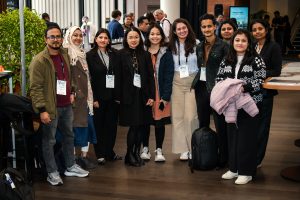
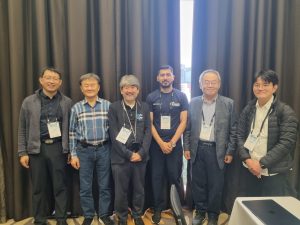
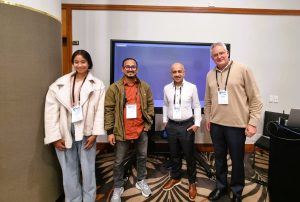
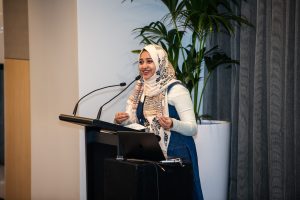
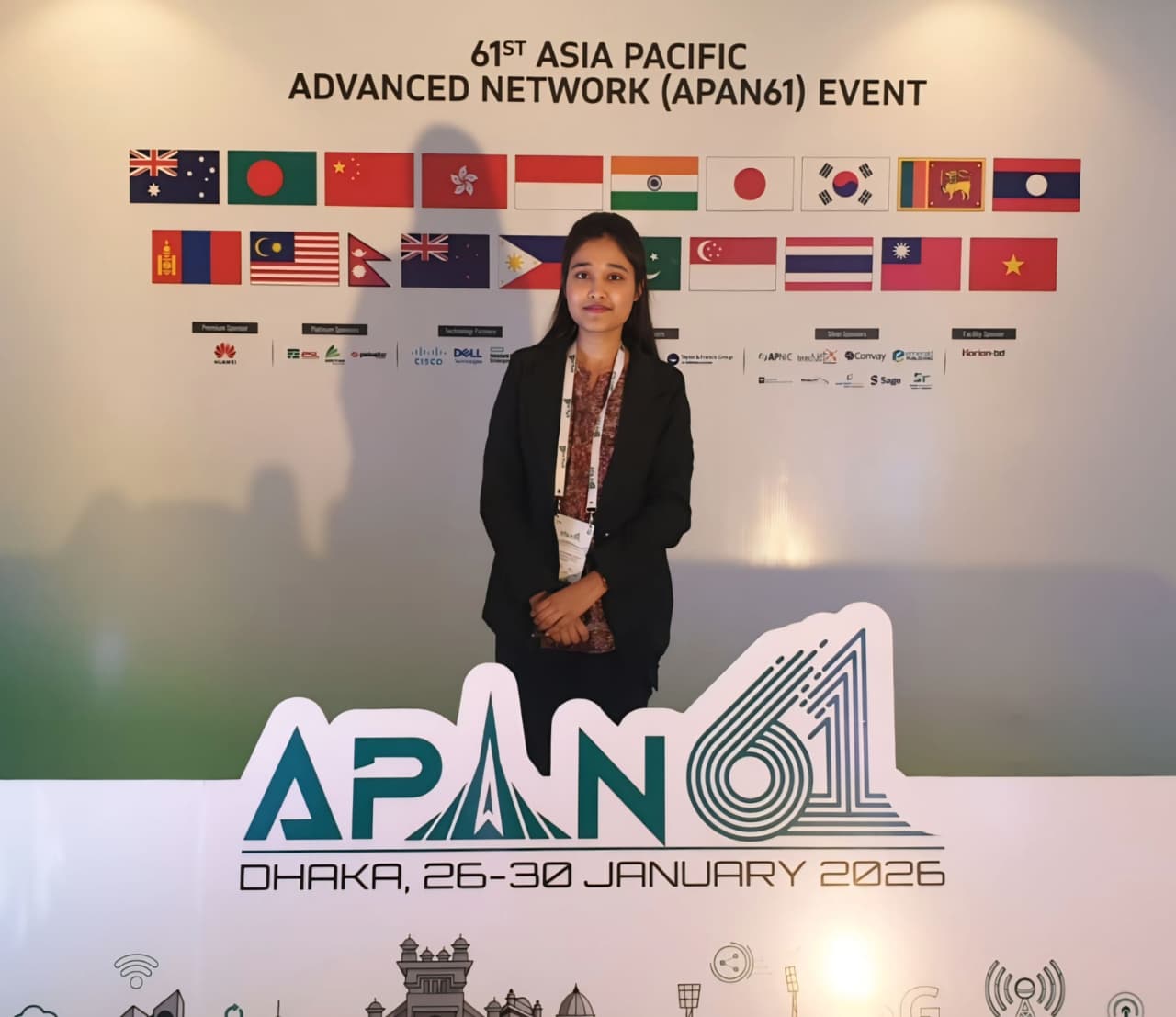
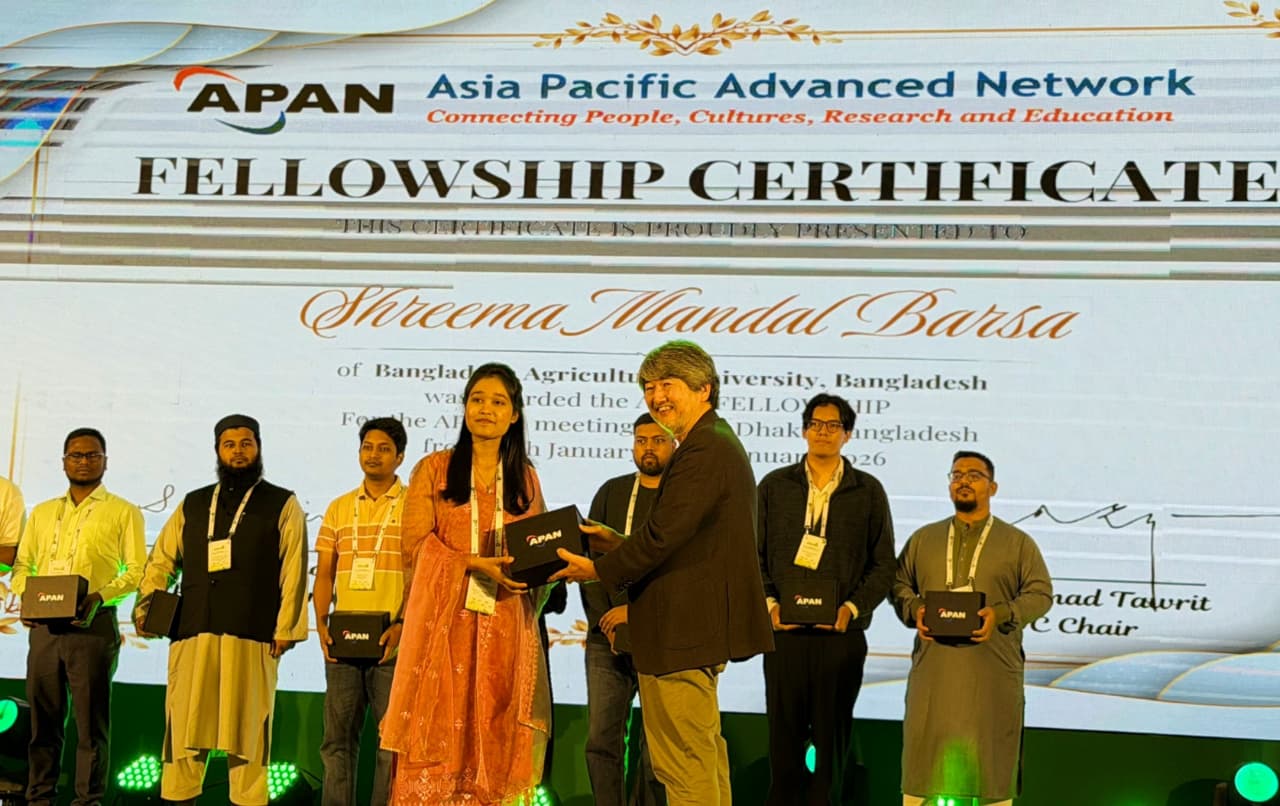
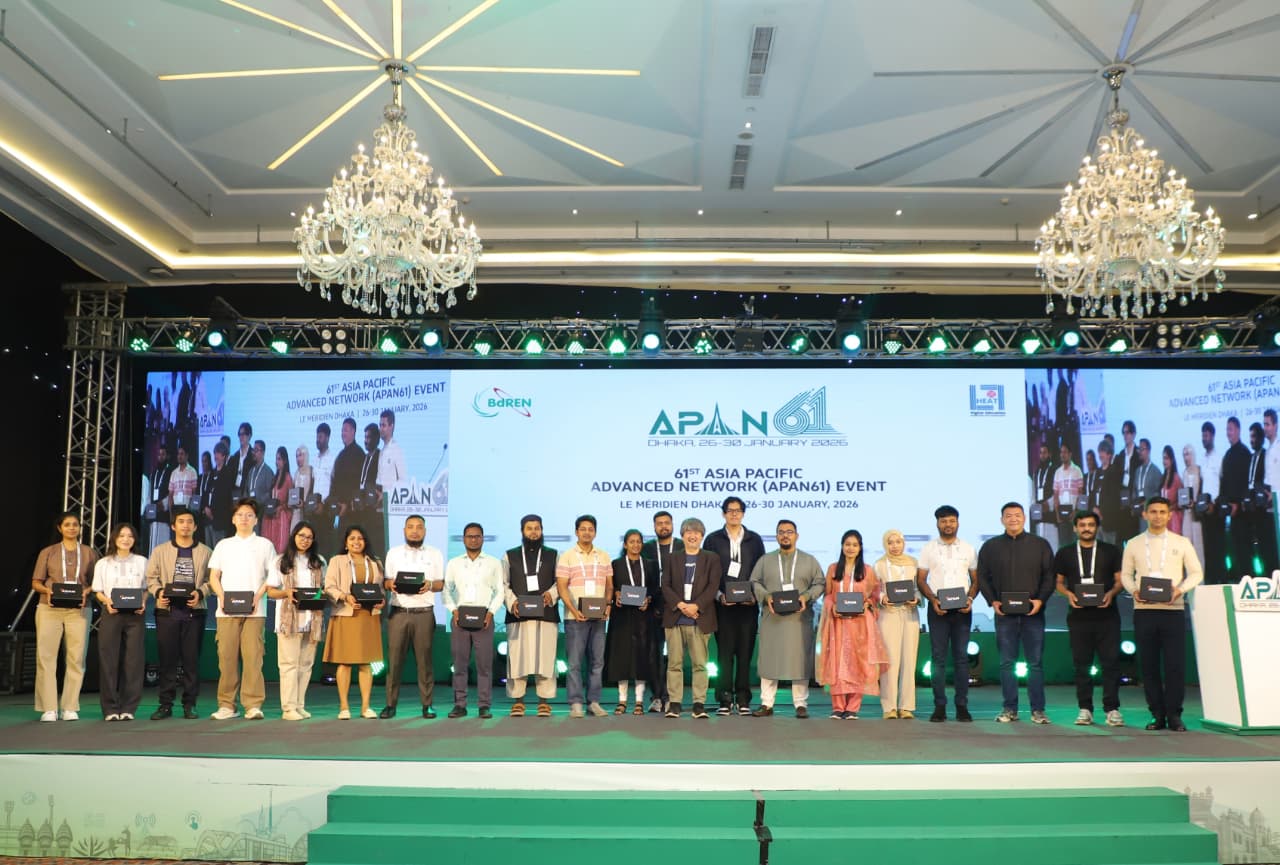
Attending the 61st Asia Pacific Advanced Network (APAN61) as a Fellow was a truly enriching experience. The fellowship provided a unique opportunity to engage with a diverse research community and observe how global networking, partnerships and open science initiatives are shaping the future of research. These experiences enhanced my understanding of cross-cultural collaboration and highlighted the importance of communication, adaptability, and teamwork in a global academic environment.
During the program, I participated in various sessions, workshops, and discussions led by experts and interacted with participants from different countries and backgrounds. The Open and Data Sharing Session was particularly insightful. Experts emphasized that open data relies on legal, organizational, and technical interoperability, and that persistent identifiers like DOIs increase research visibility.
The AP-GAINED workshop on Generative AI provided hands-on experience with tools for documentation, automation, data handling, and communication. It demonstrated practical ways these tools can improve research efficiency, including data organization and report writing.
Sessions on agriculture and rural innovation resonated with my background in crop protection and entomology. I observed how digital infrastructure, community participation, and simple technologies support agricultural sustainability and smallholder farmers. Presentations on Participatory Guarantee Systems (PGS) highlighted trust-based, locally-driven approaches to verify organic practices. The Saladin community water management case in Thailand, conducted by Montree Pinkaeo, showed how farmers use monitoring data and community-led planning to address challenges like floods, droughts, and salinity. The workshop on Phytosanitary Challenges and Invasive Species was directly relevant to my fieldwork. My supervisor, Prof. Mohammad Shaef Ullah, was one of the speakers. The session highlighted how invasive pests and pathogens threaten agricultural biodiversity and food security. It reinforced the need for research to be combined with digital systems, monitoring, and community interventions for sustainable outcomes.
Beside the academic sessions, the program included a cultural program showcasing local traditions, music, and art. Participants from different countries wore their traditional costumes, creating a vibrant and engaging atmosphere. It was a wonderful opportunity to appreciate multiple cultures and interact informally with people from varied backgrounds.
I am sincerely grateful to BdREN for hosting APAN61 and to the APAN Fellowship Committee for this invaluable opportunity. The conference was more than an event; it was a transformative experience that reshaped my understanding of global research collaboration.

Author: Shreema Mandal Barsa, Bangladesh Agricultural University, Bangladesh