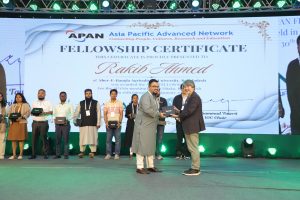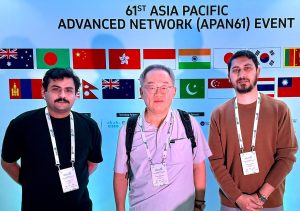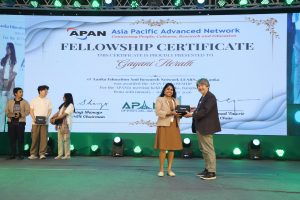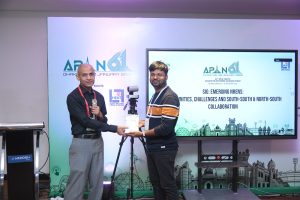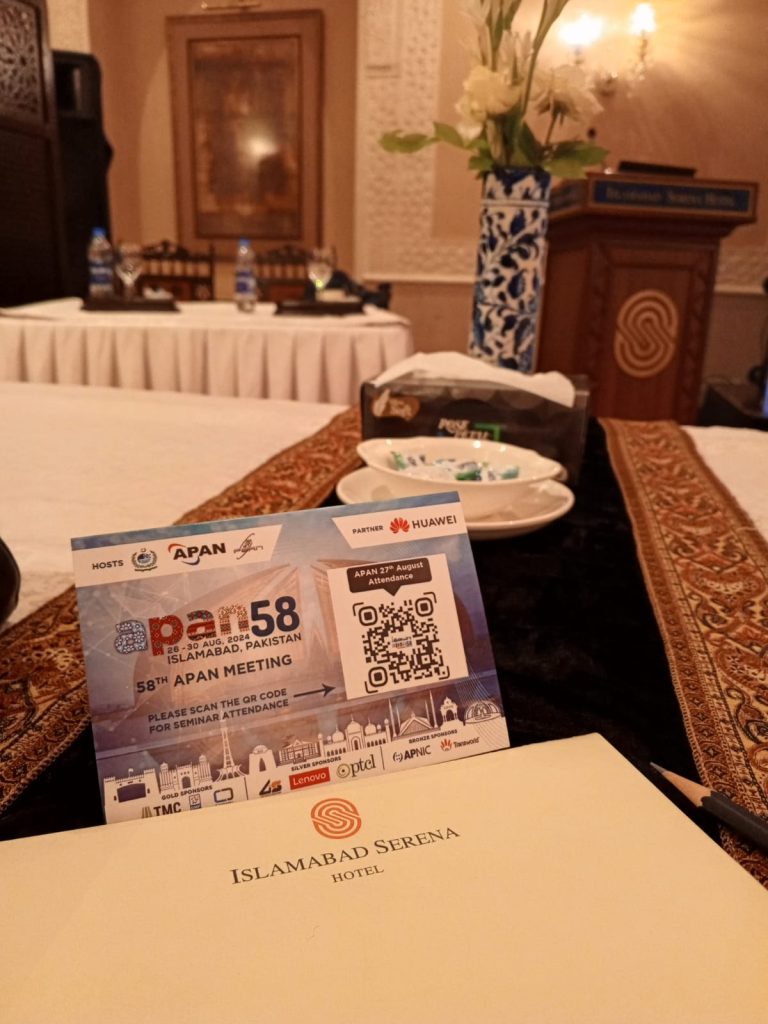
I recently had the privilege of attending the 58th Asia Pacific Advanced Network (APAN) conference hosted by HEC Pakistan and the Pakistan Education and Research Network (PERN). It was a true honor to be selected as a fellow for APAN58, and I’m deeply grateful for the opportunity to engage in such an exceptional event.
From the outset, APAN58 was an inspiring experience. The conference kicked off with the APAN Introduction & Fellowship Meeting, led by Liana Jacinta. Her insightful overview of APAN’s goals and the introductions of fellow attendees created a collaborative and welcoming atmosphere that set the tone for the entire event.
One of the highlights for me was the Agriculture Working Group (AgWG) & Rural Hybridization session. This session explored the innovative applications of IoT and web services in agriculture and rural development. Presentations by Mitsuru Kameya on Japan’s ICT policies for agriculture and Seishi Ninomiya on smart farming techniques from the University of Tokyo were particularly illuminating. However, additional sessions on crop monitoring technologies would have enriched the discussions. Incorporating more hands-on workshops or detailed handouts for these topics could significantly enhance the learning experience, especially for those engaged in similar projects.
The Workshop on GenAI for NREN Empowerment, led by Dr. Asitha Bandaranayake, was another engaging and interactive session that provided valuable insights into leveraging generative AI within National Research and Education Networks (NRENs). The thought-provoking discussions sparked ideas I am eager to incorporate into my work.
The Disaster Mitigation Working Group session, led by Veerachai Tanpipat and Franz De Leon, focused on hazard risk analysis and best practices for disaster preparedness. It showcased how regional collaboration and shared services can significantly enhance global disaster risk management.
Additionally, the Asia Pacific Research Platform (APRP) Working Group session was equally impressive. Dr. Raj Kettimuthu’s keynote on INTERQNET and its role in scalable quantum networks emphasized the importance of international collaboration in advancing emerging technologies.
Beyond the sessions, I had the opportunity to immerse myself in the local culture. One of my favorite experiences was exploring the art of calligraphy and mehndi (henna) design. Engaging with local artists not only deepened my appreciation for Pakistan’s rich artistic traditions but also offered a refreshing break from the conference discussions.
The hospitality provided by the HEC team was outstanding. The accommodations, transportation, luxury dinners, and organized tours were impeccable. These facilitated meaningful interactions with senior alumni and HEC members and enhanced the sense of community APAN embodies.
In conclusion, APAN58 was a profoundly impactful and enlightening experience. I am immensely grateful for the chance to attend as a fellow and to collaborate with such a diverse group of experts. For future events, I would love to see:
- More hands-on training opportunities in the Agriculture Working Group, mainly focused on crop monitoring technologies and practical applications of AI in agriculture.
- Detailed handouts or recordings of sessions for topics that may be missed, ensuring that valuable practical knowledge is accessible to all participants.
- Continued emphasis on interactive workshops and practical demonstrations to complement theoretical sessions.
I look forward to applying the knowledge gained and participating in future APAN events. Thanks again to the APAN and HEC teams for organizing such a remarkable conference!