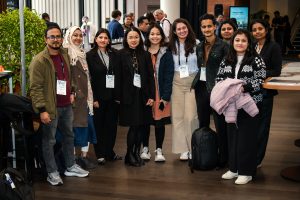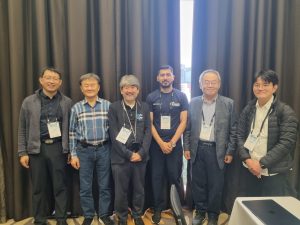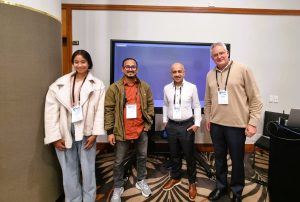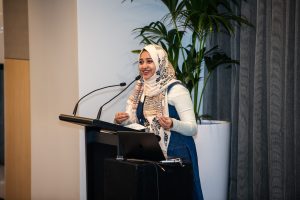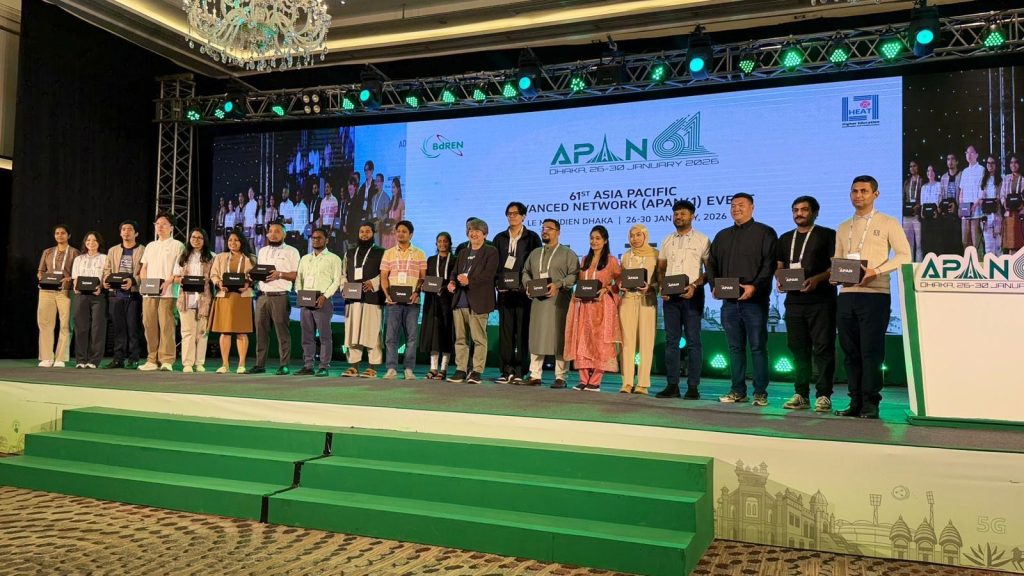
Being selected as a Fellow at APAN61 under the Asia-Pacific Advanced Network (APAN) was both an honor and a transformative experience in my professional journey. The fellowship provided me with meaningful exposure to the regional research and education networking ecosystem and allowed me to directly engage with experts, working group chairs, and institutional leaders who are shaping the future of advanced networking, high-performance computing, and collaborative scientific research across the Asia-Pacific region.
One of the working groups that significantly enriched my learning experience was the HPC and AI Working Group. The discussions revolved around the accelerating convergence of high-performance computing and artificial intelligence, particularly in enabling AI-driven scientific discovery and data-intensive research. It was evident that research communities across the Asia-Pacific region are moving toward distributed computing models where compute resources, data repositories, and research applications are interconnected through high-speed research and education networks. A particularly noteworthy initiative shared during the discussions was the plan to establish a National AI & HPC Research Backbone for universities in Bangladesh. This initiative, supported by BdREN, aims to interconnect universities through a dedicated high-performance research network capable of supporting AI workloads and large-scale computational research.
Another most impactful engagements during APAN61 was my participation in the Asia Pacific Research Platform (APRP) Working Group, chaired by Jeonghoon Moon. The APRP initiative presents a compelling vision of strengthening collaboration among Asia-Pacific HPC hubs by creating a federated and performance-oriented research ecosystem. The conversations centered on interconnecting national HPC centers through dedicated research networks, establishing trusted data-sharing mechanisms, and enabling distributed scientific workflows that can operate efficiently across borders. What struck me most was the forward-looking approach of APRP in positioning the region to support high-value research domains such as AI-Science, bio-science, climate and weather modeling, medical research, genomics, agriculture technology, and advanced information systems. These fields demand massive computational power and tightly integrated research infrastructure.
As I reflected on these conversations, I recognized strong alignment with initiatives in the Philippines led by the Department of Science and Technology (DOST). The establishment of the National AI Hub represents a strategic national effort to strengthen artificial intelligence research and high-performance computing capabilities. The National AI Hub aims to provide centralized computational resources, promote AI-driven innovation, and support research across academia, government, and industry. In the context of APRP’s regional vision, this initiative positions the Philippines to actively participate in a broader Asia-Pacific HPC federation model.
Beyond the technical working groups, my participation in the Special Interest Group on Marketing and Communications offered a different yet equally valuable perspective. The discussions focused on how the APAN community can effectively communicate its mission, increase engagement, and strengthen its regional presence. It was an opportunity to understand how technical excellence must be complemented by strong storytelling, branding, and strategic outreach. During the session, I shared how Caraga State University advances its mission through infrastructure modernization, strategic partnerships, and proactive advocacy of emerging technologies. I discussed how collaboration with partners enables the deployment of modern network security solutions, resilient architectures, and capacity-building initiatives that elevate institutional readiness. It was insightful to hear parallel experiences from other institutions across the region. Despite differences in scale and national context, many of us face similar challenges in digital transformation, funding sustainability, stakeholder engagement, and talent development. The exchange reinforced the idea that community-building and communication are just as critical as technical innovation in sustaining research ecosystems.
Overall, the APAN61 Fellowship enriched my understanding of federated research infrastructures, cross-border HPC integration, AI-enabled scientific research, and community-driven innovation. It strengthened my commitment to contributing to resilient, high-capacity, and secure research networks that can support next-generation applications and collaborative platforms. I would like to express my sincere gratitude to the entire APAN community under the Asia-Pacific Advanced Network for fostering an inclusive and forward-thinking environment that empowers emerging leaders in research networking. I extend my special appreciation to Mohammad Tawrit, CEO of BdREN, for his full support and encouragement throughout the fellowship. I am equally grateful to Liana Jacinta for her guidance and mentorship, and to the logistics team for their efficiency and professionalism in ensuring the success of the program.

Author: Clark Justine Gonzales, Caraga State University