1. Introduction
This report presents my participation in APAN 61, the 61st meeting of the Asia Pacific Advanced Network (APAN), held in Bangladesh from 26–31 January 2026. APAN is a leading regional consortium that connects national research and education networks (NRENs), universities, research institutions, and industry partners across the Asia-Pacific region. The network serves as a collaborative platform for advancing high speed research networking, cybersecurity, digital infrastructure, data governance, and emerging technology initiatives that support scientific innovation and cross border research collaboration.
I was selected as a Fellow under the competitive APAN Fellowship Program, which supports emerging researchers and academics by providing opportunities for engagement, collaboration, and exposure to regional research networking initiatives. The fellowship aims to nurture future leaders in digital innovation and research infrastructure development within the Asia-Pacific community.
During APAN 61, I delivered a 20 minute presentation under the Medical Working Group, where discussions focused on digital health, medical data exchange, secure research collaboration, and infrastructure challenges within healthcare research ecosystems. My presentation contributed to ongoing discussions on data security and responsible information access in research environments. In addition, I participated as a speaker in a session organized on behalf of the Omics Data Security Birds-of-a-Feather (BoF) Group. This session addressed emerging concerns related to the protection, sharing, and governance of omics data, particularly in collaborative and cross institutional research contexts. The discussion emphasized the importance of secure data infrastructures, regulatory compliance, and ethical considerations in large scale biological data sharing.
As a Lecturer, my primary objectives in attending APAN 61 were to broaden my professional and research network, gain exposure to cutting edge developments in advanced networking and cybersecurity, and explore potential collaborative opportunities with regional and international experts. The conference provided valuable insights into emerging technological trends, policy developments, and best practices in secure information management. Furthermore, participation in working group discussions enabled deeper engagement with interdisciplinary researchers and practitioners, strengthening both academic and professional connections.
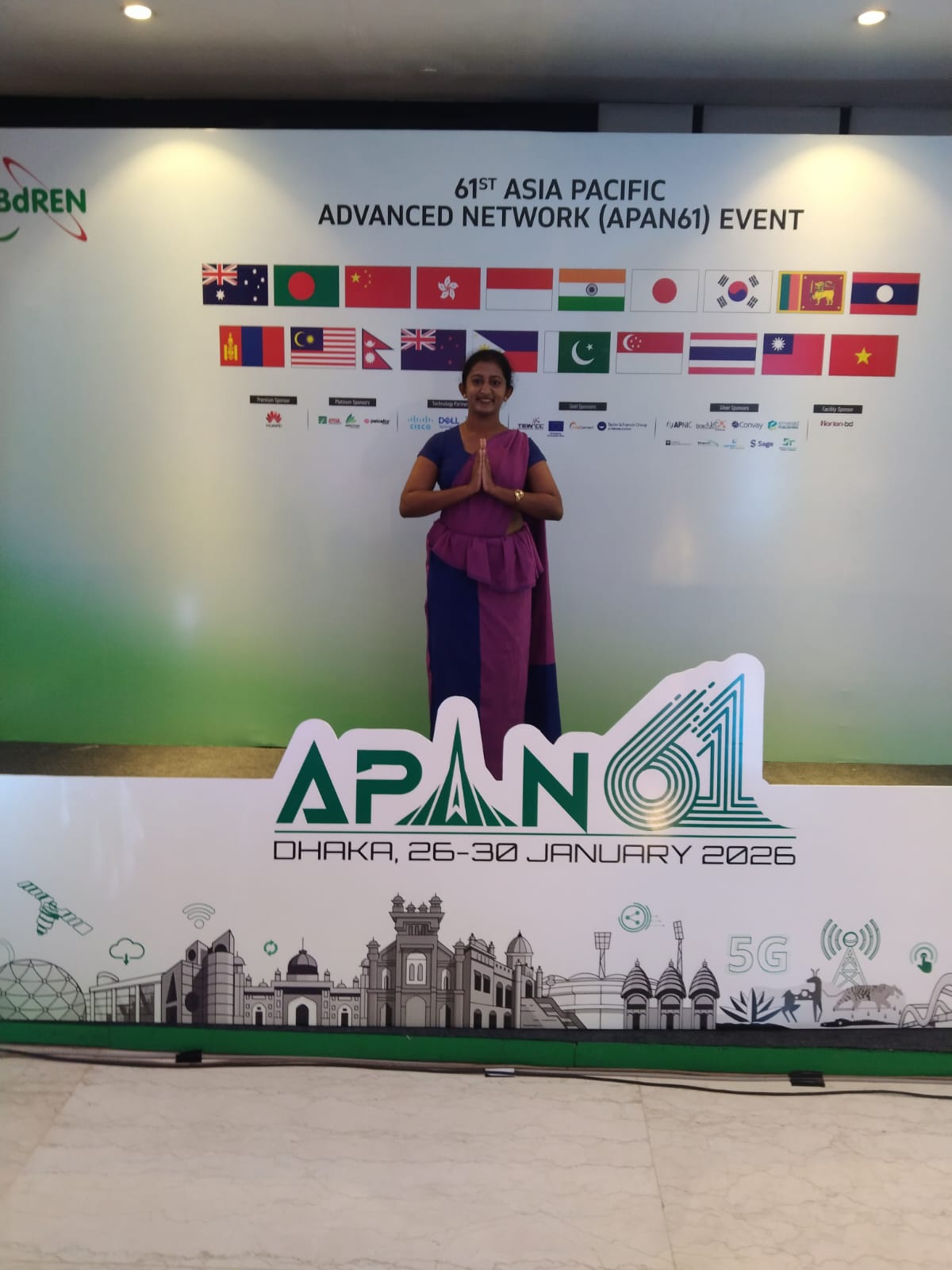
Beyond academic contributions, I also participated in the cultural program organized during the conference, proudly representing Sri Lanka. This experience fostered cross cultural engagement and strengthened regional goodwill among participants from diverse countries.
Overall, APAN 61 served as a significant platform for knowledge exchange, capacity building, and strategic networking. The experience enhanced my understanding of research infrastructure and data security challenges while contributing to my professional growth as an academic engaged in technology driven research and education.
2. Participation and Contributions
2.1 Presentation at the Medical Working Group
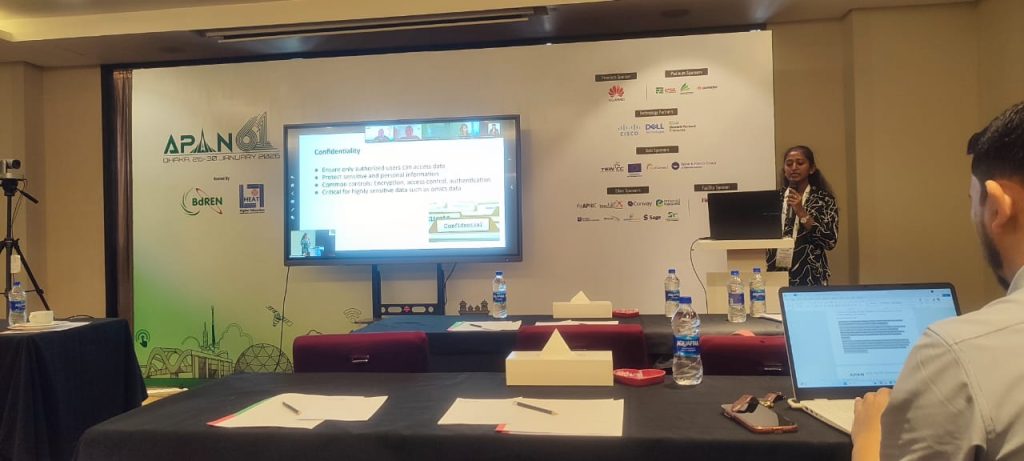
During APAN 61, I delivered a 20-minute presentation under the Medical Working Group titled “Regional Policy Framework for Omics Data Privacy and Security in the Asia-Pacific Region.” The presentation was conducted as an online session on 29th January 2026. The session addressed the growing need for a harmonized regional approach to managing omics data, considering the rapid expansion of genomics, proteomics, and other large scale biological data initiatives across the Asia-Pacific region.
The presentation highlighted key challenges in cross border omics data sharing, including data privacy risks, regulatory fragmentation, inconsistent ethical standards, and cybersecurity vulnerabilities within research infrastructures. I discussed the importance of establishing a regional policy framework that aligns data governance principles, promotes secure data exchange, and supports responsible innovation while respecting national regulations and cultural sensitivities.
The presentation also emphasized the role of research and education networks (NRENs) in enabling secure and scalable data transfer, as well as the need for technical safeguards such as access control mechanisms, encryption standards, audit trails, and accountability frameworks. Participants engaged in discussions on interoperability challenges, legal harmonization, and the practical feasibility of implementing shared policy guidelines across diverse jurisdictions.
The feedback received during the session reflected strong interest in collaborative efforts to strengthen regional data protection standards, particularly in the context of precision medicine and cross institutional biomedical research.
2.2 Contribution to the Omics Data Security Birds-of-a-Feather (BoF) Session
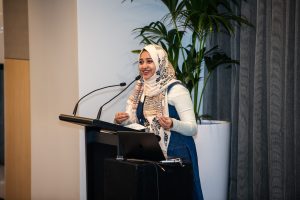
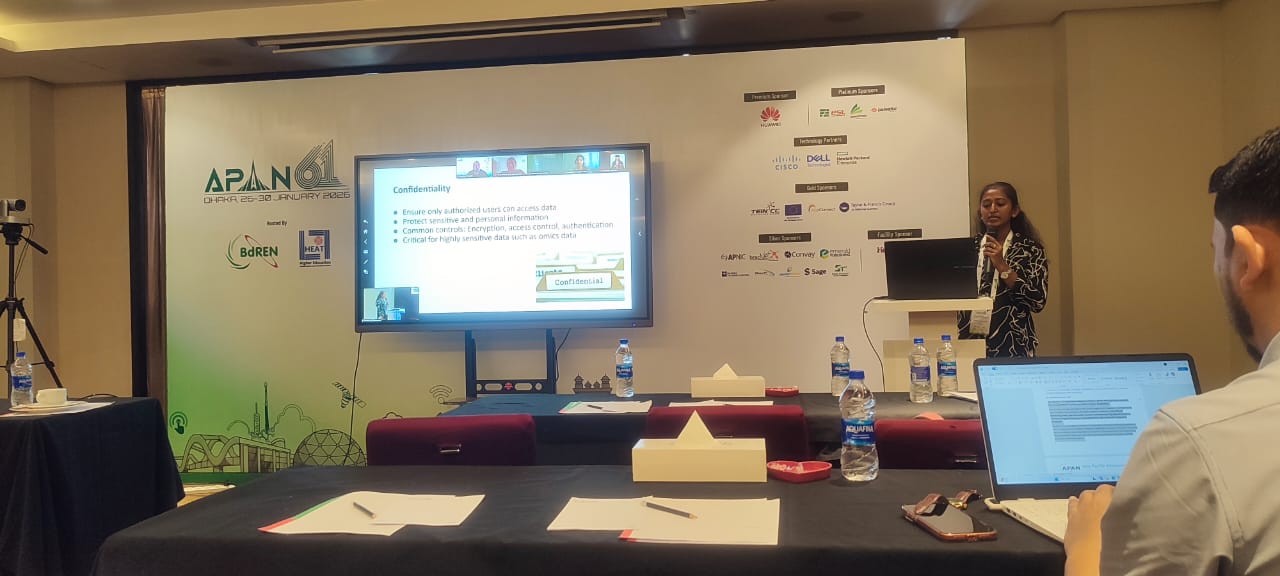
In addition to the Medical Working Group presentation, I contributed as one of the speakers in a session organized on behalf of the Omics Data Security Birds-of-a-Feather (BoF) Group. The session was held on 28 January 2026 in Room Somapura and was conducted in a hybrid format. Four members of our group delivered presentations during this session. While the other members presented online, I delivered my presentation physically at the venue.
The BoF session provided an interactive platform to explore practical and policy-level concerns related to omics data governance and security. Building upon the topic “Regional Policy Framework for Omics Data Privacy and Security in the Asia-Pacific Region,” I facilitated discussion on the necessity of a coordinated regional policy framework to address emerging risks such as data misuse, unauthorized secondary use, re-identification risks in genomic datasets, and vulnerabilities in collaborative research environments.
The discussion also examined challenges arising from differing national privacy laws, regulatory fragmentation, and the absence of standardized compliance mechanisms across institutions within the Asia-Pacific region. Participants shared insights from their respective countries, highlighting both technical and governance related barriers to secure cross border omics data sharing.
The BoF session enabled open dialogue among researchers, network engineers, and policy stakeholders regarding technical safeguards, governance models, and capacity building initiatives required to ensure responsible and secure omics data exchange. The session reinforced the importance of regional cooperation in building trusted digital ecosystems for omics research. It also identified potential opportunities for continued collaboration within APAN to develop shared recommendations, best practices, and working guidelines that can strengthen data privacy and security standards across the region.
2.3 Summary Presentation at APAN 61 General Session
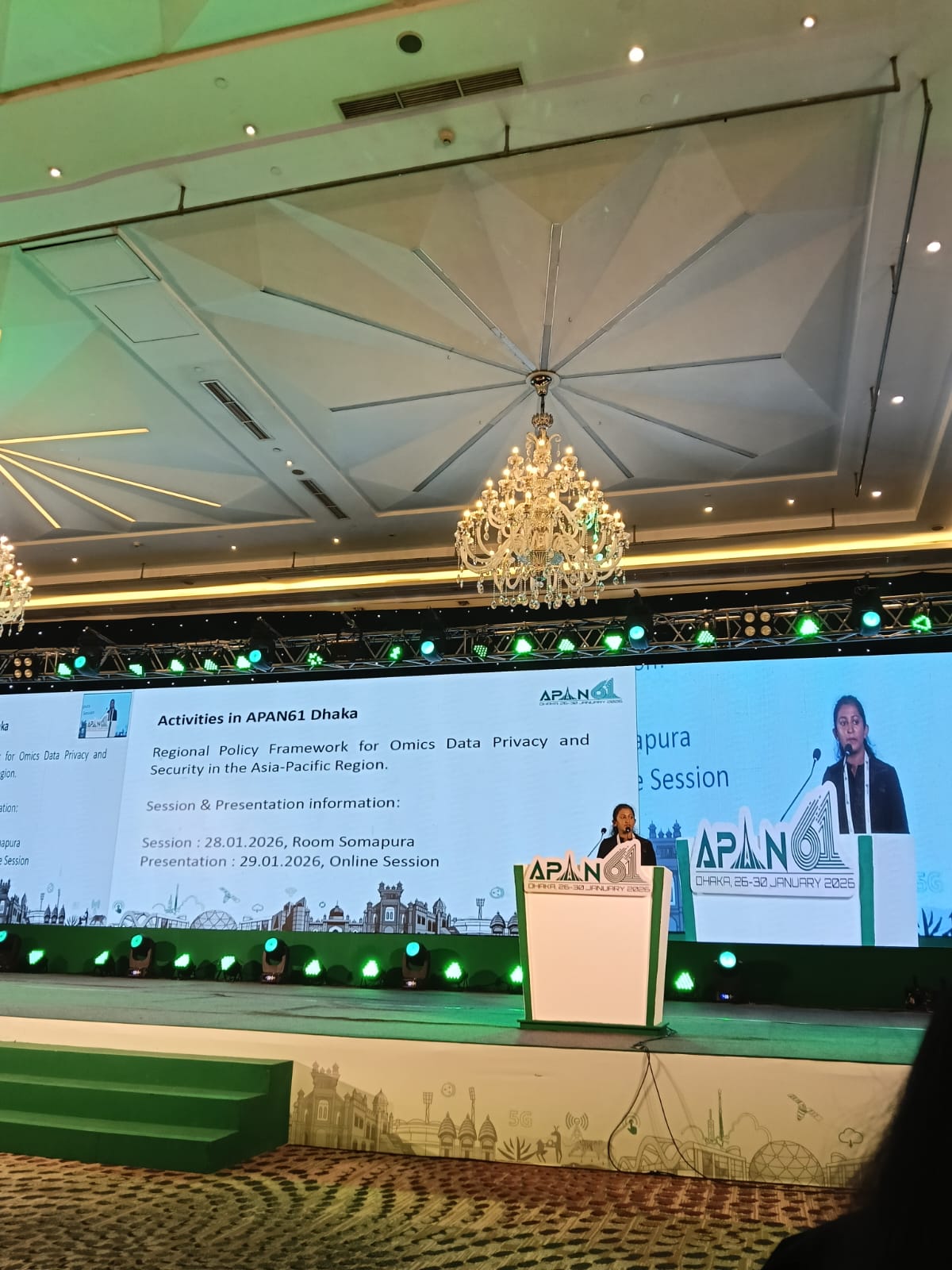
In addition to my contributions to the Medical Working Group and the Omics Data Security Birds-of-a-Feather (BoF) session, I delivered a 5-minute summary presentation on behalf of the Omics Data Security Group during the session chairs’ reporting segment at APAN 61.
This segment consisted of short summaries from each working group and BoF session, outlining their activities and progress. I provided an overview of the group’s key activities and milestones. The summary included the group’s previous contribution at APAN 59 in Yokohama, Japan, where Dr. Sugandima presented on “Enhancing Security for Omics Data Using Advanced Technologies.”
I then highlighted the group’s activities at APAN 61 in Dhaka, including our session on “Regional Policy Framework for Omics Data Privacy and Security in the Asia-Pacific Region.” I briefly outlined the main discussion themes, including regional policy harmonization, cross-border data governance challenges, and the importance of strengthening security frameworks for omics research collaboration.
This summary presentation provided visibility to the ongoing work of the Omics Data Security Group within APAN and reinforced the importance of continuing regional dialogue and collaboration in addressing data privacy and security challenges in biomedical research.
2.4 Participation in Key Sessions – 26 January 2026
On 26 January 2026, I participated in the APAN Introduction & Fellowship Program, which provided an overview of the mission, structure, and strategic role of the Asia Pacific Advanced Network (APAN) in advancing research and education networking across the Asia-Pacific region. The session also enabled fellows to connect with peers and mentors while understanding opportunities for engagement in working groups and regional initiatives.
I further attended the HPC/AI Working Group meeting and the “Open and Data Sharing Toward Open Science” session. These discussions focused on high-performance computing, artificial intelligence infrastructure, legal and organizational interoperability, persistent identifiers, open science practices, and research integrity. The sessions highlighted the importance of building interoperable, secure, and sustainable digital research infrastructures across the region.
Additionally, I participated in the closed “Choose What You Learn” session, which explored national AI and HPC development strategies, capacity building, and regional collaboration efforts. Overall, the sessions on 26 January strengthened my understanding of open science, AI-driven research ecosystems, and the critical role of policy and infrastructure in supporting secure and responsible data sharing.
2.5 Participation in Sessions – 27 January 2026
On 27 January 2026, I participated in multiple technical and strategic sessions at APAN 61. I attended the Network Engineering Special Interest Group (SIG) session, which covered developments in routing security, DDoS mitigation, backbone network upgrades, DNS security analysis, and open-source network monitoring solutions. Presentations such as BGPWatch, SINET6 DDoS Mitigation Service Update, Asia Backbone Update, and RMap highlighted emerging challenges in routing security, DNS misconfigurations, and large-scale network resilience. The session provided valuable insights into operational best practices and infrastructure-level security improvements within research and education networks.
In the afternoon, I attended the Security Working Group session, which featured presentations on Explainable AI for enhancing AI security, securing national ccTLD infrastructure, strengthening National Research and Education Networks (NRENs), and real-world threat intelligence analysis based on honeynet deployments. These discussions emphasized the importance of security awareness, AI transparency, DNS protection, and proactive threat monitoring in strengthening regional cybersecurity capabilities.
The Opening Ceremony and Opening Dinner were also held on this day. The ceremony marked the formal commencement of APAN 61 and highlighted the importance of regional collaboration in research and education networking. The evening concluded with a cultural program featuring traditional performances, providing an opportunity for cross-cultural exchange and informal networking among participants from across the Asia-Pacific region.
2.6 Participation in Sessions – 28 January 2026
On 28 January 2026, I attended the session on Emerging NRENs: Opportunities, Challenges and South-South & North-South Collaboration, which focused on strengthening National Research and Education Networks (NRENs) in developing regions. The session highlighted recent achievements of emerging NRENs, including regional collaboration initiatives such as SEACREN, and discussed future plans, sustainability strategies, and shared challenges. Discussions emphasized the importance of South-South collaboration among Asi@Connect RENs and partnerships with global networks to enhance infrastructure development, capacity building, and knowledge exchange. The session provided valuable insight into how regional cooperation models can accelerate digital research transformation in emerging economies.
In the afternoon, I participated in the Omics Data Security Birds-of-a-Feather (BoF) session held in Room Somapura. This session provided an interactive platform to discuss privacy, governance, and security challenges associated with omics data sharing in cross border research environments. As one of the speakers, I contributed to discussions on the need for a regional policy framework to support secure and responsible omics data exchange within the Asia-Pacific region. The session reinforced the importance of harmonized policies, technical safeguards, and sustained collaboration to build trusted research ecosystems.
2.7 Participation in Sessions – 29 January 2026
On 29 January 2026, I participated in the interactive workshop “You Choose What to Learn in Security”, conducted by Jamie Gillespie, Senior Security Specialist. Discussions covered core security principles including confidentiality, integrity, and availability (CIA), DDoS mitigation strategies, DNS and email security, vulnerability reporting programs, and security awareness practices. The workshop provided practical insights into real-world security challenges and reinforced the importance of both technical safeguards and user awareness in strengthening institutional cybersecurity posture.
Later in the afternoon, I delivered my presentation titled “Regional Policy Framework for Omics Data Privacy and Security in the Asia-Pacific” under the Medical session (Single Presenter category). The presentation focused on regional harmonization of omics data governance, cross border privacy challenges, and the need for policy alignment to ensure secure biomedical research collaboration.
In the evening, I attended the Social Dinner held at the Grand Ballroom. During the cultural program, I proudly represented Sri Lanka by participating in the cultural show. The event provided an opportunity for cultural exchange and informal networking, strengthening regional connections within the APAN community.
2.7.1 Participation in Cultural Show
In the evening, I had the honor of representing Sri Lanka in the cultural show held during the Social Dinner at the Grand Ballroom. The performance showcased traditional dance, music, costume, offering a platform for cultural exchange and strengthening informal connections within the APAN community.
2.8 Participation – 30 January 2026
On 30 January 2026, I attended the Closing Ceremony and General Assembly held at the Grand Ballroom, Le Meridien, Dhaka. The Closing Ceremony marked the formal conclusion of APAN 61, reflecting on the key achievements and collaborative efforts throughout the week.
During the General Assembly, session chairs delivered brief summary presentations highlighting the main discussions, outcomes, and future directions of their respective working groups and Special Interest Groups. The APAN61 Local Organizing Committee (LOC) also presented an overall report on the event. Souvenirs and certificates were awarded to APAN61 Fellows in recognition of their participation and contributions. The session concluded with the official welcome by the host of APAN62, symbolizing the continuation of regional collaboration within the APAN community.
3. Key Learnings and Insights
Participation in APAN 61 provided me with a comprehensive understanding of both technical and policy-level developments in research networking, cybersecurity, and data governance. Through attending workshops, technical sessions, and Birds-of-a-Feather discussions, I gained exposure to advanced networking practices, including routing security, DDoS mitigation, DNS protection, and AI-driven cybersecurity measures. These sessions highlighted operational best practices for building robust and resilient research and education networks across the Asia-Pacific region.
Engagement in the Omics Data Security BoF and my own presentation on regional policy frameworks emphasized the importance of harmonized governance for biomedical data. Discussions underscored the need for consistent ethical standards, secure cross-border collaboration, and technical safeguards such as encryption, access control, and audit mechanisms. This reinforced the critical role of both technical and policy-level measures in ensuring responsible and secure omics data sharing.
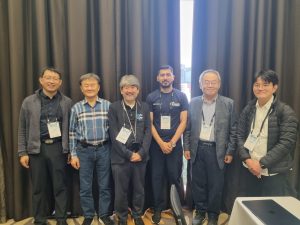
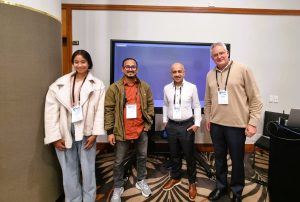
The conference also facilitated significant professional networking opportunities. Interactions with NREN representatives, researchers, and policy experts opened pathways for potential collaborative projects and partnerships across the region. Sessions on high performance computing, AI infrastructure, and open science practices further deepened my understanding of the need for interoperable, scalable, and sustainable research environments. Beyond the technical content, participation in social dinners and the cultural program allowed for cross cultural exchange, strengthening informal connections and regional goodwill among participants.
4. Outcomes and Contributions
My participation in APAN 61 resulted in multiple tangible and intangible outcomes. Through my presentations under the Medical Working Group and the Omics Data Security BoF, I contributed to raising awareness of regional challenges in data privacy, governance, and secure cross-border research collaboration. These sessions enabled discussions on technical safeguards, regulatory alignment, and ethical considerations, providing practical insights for building trusted digital research ecosystems.
Networking during the conference facilitated the establishment of professional connections with researchers, network engineers, and policy stakeholders, creating opportunities for future collaboration. Representing Sri Lanka in the cultural show added a unique dimension to my participation, allowing me to showcase national traditions while fostering cross-cultural understanding. Overall, the experience reinforced the objectives of the APAN Fellowship Program by enhancing my skills, professional visibility, and engagement with regional initiatives in research networking and data security.
5. Conclusion
APAN 61 provided a unique and valuable platform for professional development, knowledge exchange, and regional collaboration. Participation in technical sessions, workshops, and Birds-of-a-Feather discussions enhanced my understanding of secure research infrastructures, omics data governance, and advanced networking practices. The experience also emphasized the importance of cross-cultural engagement and informal networking in building regional connections.
Overall, APAN 61 significantly contributed to my professional growth as a Lecturer in Computer Science. The insights gained, connections made, and experiences shared have equipped me with the knowledge and networks necessary to advance teaching, research, and policy initiatives in the areas of digital infrastructure, cybersecurity, and data governance.
I would like to sincerely thank the APAN Fellowship Program for offering me this invaluable opportunity to participate in APAN 61. I am deeply grateful to the Local Organizing Committee and all members of APAN for their excellent arrangements, warm hospitality, and support throughout the conference. From airport transfers to accommodation and event coordination, their efforts ensured a smooth and enriching experience for all participants. A special thanks goes to BdREN for their outstanding hospitality and for making us feel welcome during our stay in Dhaka. Their dedication and support greatly enhanced the overall experience and made my participation both enjoyable and impactful.

Author: Inasi Nadisha Madhushanie, University of Ruhuna