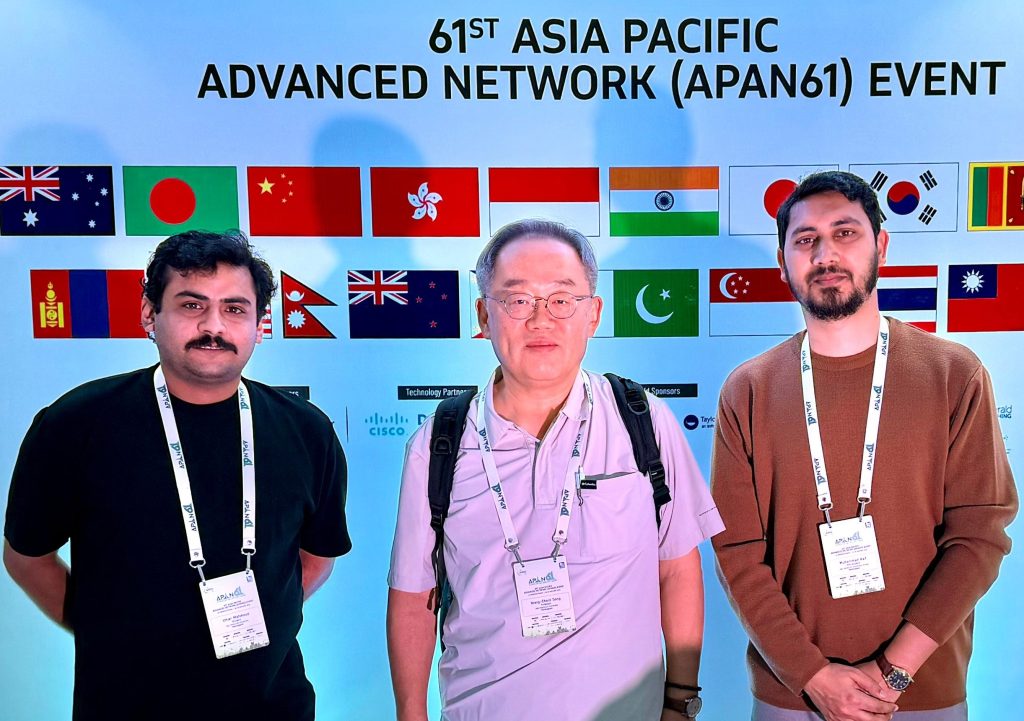
I attended APAN61 in Dhaka as a Fellow, representing Jeju National University, Republic of Korea, where I am currently pursuing my PhD. As a student fellow, my primary goals were to actively engage with the research community, present my ongoing work, receive technical feedback, and build meaningful academic connections within the Asia-Pacific advanced networking ecosystem.
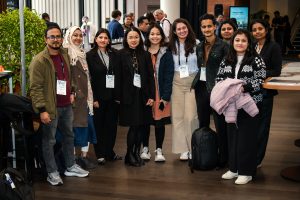
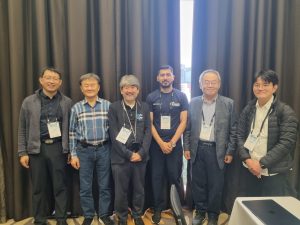
APAN61 provided a highly professional and well-organized environment that facilitated both formal technical exchange and informal scholarly interaction. The conference brought together researchers, engineers, and network practitioners from across the region, creating a valuable platform for early-career researchers like myself to integrate into the broader research community. As a result of that, I have met several experts from my field as well as from other fields.
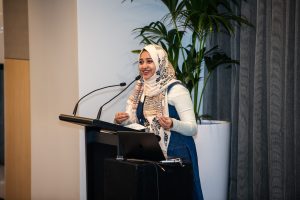
During the conference, I presented my research in the AI-Driven Networks Working Group. The presentation was titled, “An Intelligent DRL Approach for QoS-Aware Atomic Task Offloading in Hybrid LEO Satellite-Edge Networks. The work focuses on intelligent task offloading in hybrid Low Earth Orbit (LEO) satellite–edge computing environments. Traditional terrestrial Mobile Edge Computing (MEC) systems often struggle with latency and overload, particularly in remote regions. To address this, we proposed SD-SAC, a Deep Reinforcement Learning (DRL)- based framework that integrates Software-Defined Networking (SDN) with adaptive decision-making using the Soft Actor-Critic (SAC) algorithm. The framework classifies LEO satellites as either computing nodes or relay nodes and dynamically optimizes QoS-aware atomic task offloading decisions. Simulation results demonstrated improvements in end-to-end latency, task success rate, and overall Quality of Service (QoS) compared to conventional approaches.
The AI-Driven Networks Working Group itself plays an important role within APAN by focusing on the integration of artificial intelligence techniques into next-generation research and education networks. Discussions during the sessions highlighted ongoing efforts in autonomous network management, AI-based traffic engineering, intelligent orchestration, and data-driven optimization. The working group continues to evolve as AI becomes a foundational component of future network architectures. Its future direction appears to emphasize scalable deployment, real-world experimentation, and stronger collaboration between academia and operational research networks. As a PhD student working in AI-enabled networking, I see significant potential to remain engaged with this working group and contribute to its future activities.
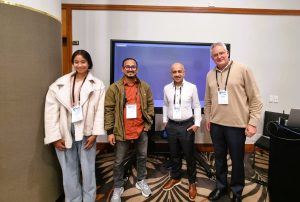
As a student researcher, presenting in this working group was an important milestone. I received constructive and encouraging feedback from experts in AI-driven network management, satellite communications, and edge computing. Discussions focused on scalability in large LEO constellations, practical deployment considerations, and integration with emerging non-terrestrial network (NTN) architectures. The feedback was technically insightful and will directly contribute to strengthening the next phase of my doctoral research.
In addition to presenting, I attended the Security Workshop and several other working group sessions. These working groups addressed topics such as distributed network security, zero-trust models, AI-assisted threat detection, and secure routing in advanced research networks. These discussions were particularly relevant to hybrid satellite-edge architectures, which introduce new security and orchestration challenges. Participating in these sessions broadened my understanding of how security considerations can be integrated into intelligent offloading frameworks.
As a Fellow, one of my main objectives was to build professional connections and become more actively involved in the APAN research community. I had the opportunity to interact with many researchers and practitioners from different countries, exchange research ideas, and discuss potential collaborations. The networking experience was especially valuable for me as a PhD student, as it allowed me to understand current research trends, identify potential research gaps, and gain exposure to diverse perspectives in AI-driven networking.
Overall, my participation in APAN61 as a Fellow was academically enriching and professionally motivating. The experience strengthened my research direction in AI-enabled hybrid satellite–edge networks and laid the foundation for continued engagement with the APAN community in future meetings.
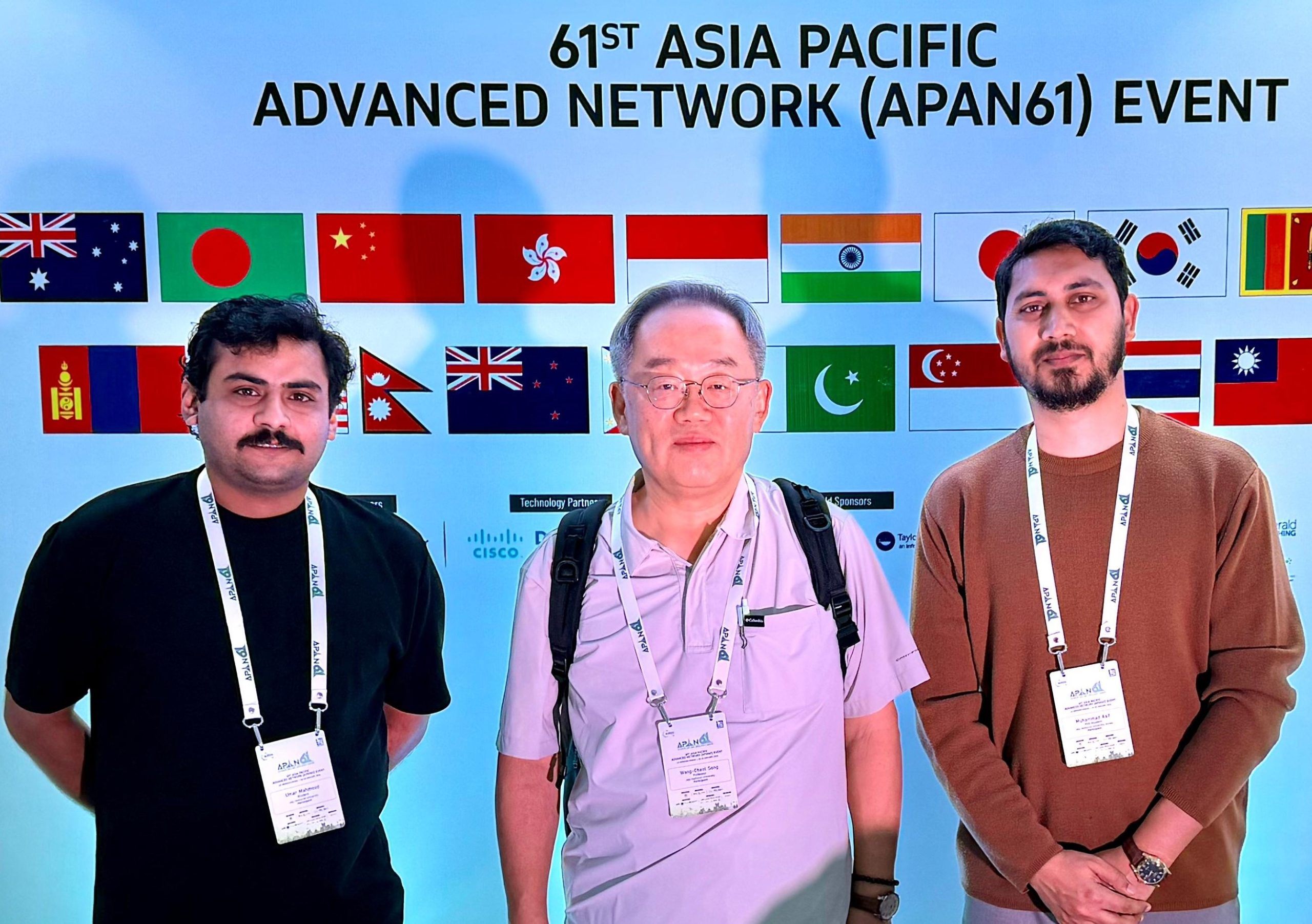
Author: Umar MAhmood, Jeju National University