- Introduction
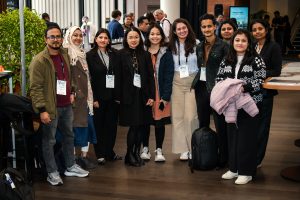
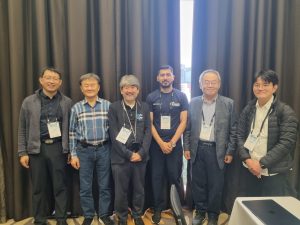
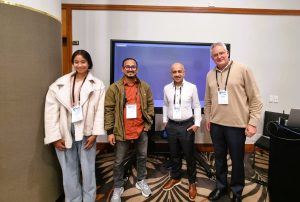
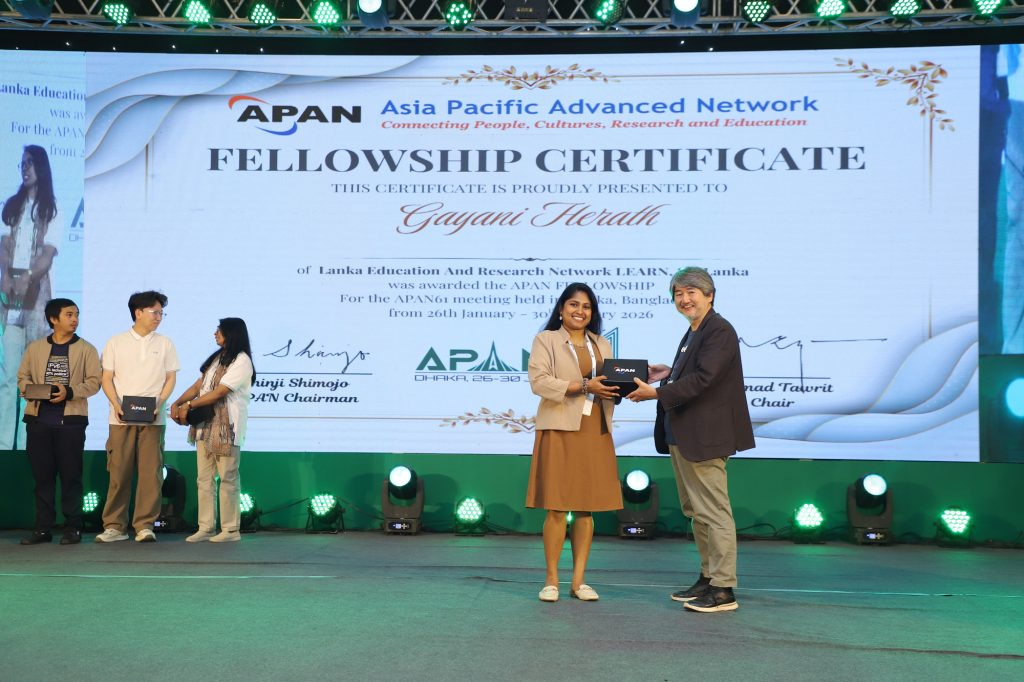
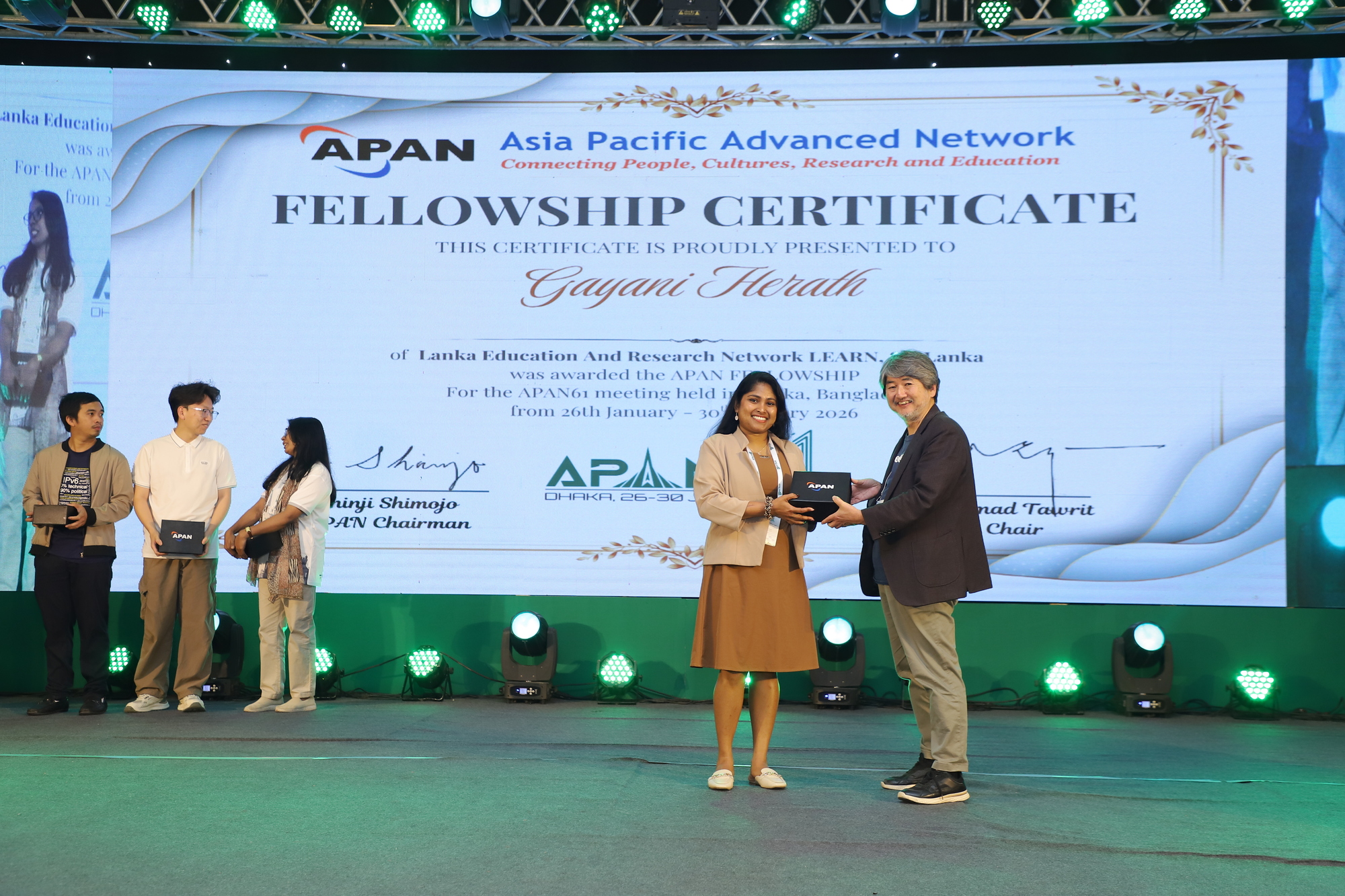
I had the privilege of attending the 61st Meeting of the Asia Pacific Advanced Network (APAN61), held in Dhaka, Bangladesh from 26–30 January 2026, as a selected Fellow. This was not my first engagement with APAN; I previously attended APAN59 in Yokohama, Japan, and participated in the AP-GAINED (Asia Pacific – Generative AI for NREN Empowerment and Development) Working Group as a trainer. These prior experiences provided continuity and deeper understanding of APAN’s evolving strategic direction.
Representing LEARN, Sri Lanka’s National Research and Education Network (NREN), I participated actively in multiple sessions at APAN61, particularly within the HPC/AI Working Group and Generative AI-focused discussions & SIG-Marketing & Communications.
The fellowship assignment required us not only to reflect on our experiences but to demonstrate what we gained by engaging with key leaders and how we intend to contribute to APAN’s future direction. This report reflects that structured engagement.
- Professional Background and Current Engagement
I currently serve as the Financial Accountant of LEARN, contributing financial, operational, and strategic perspectives to support sustainable NREN development.
In parallel with my finance role, I am actively engaged in AI capacity-building initiatives:
- Certified Trainer under the AVPN Project
- Trainer for the TVET sector under Sri Lanka’s “AI Literacy for All” Programme
- Participant in the AIDE Programme under the UNESCO Chair at Asia Pacific University (APU), Malaysia
- Active AI Trainer in Sri Lankan state universities in collaboration with Dr. Asitha Bandaranayake, Prof. Roshan Ragel & Dr. Pramila Gamage.
These engagements place me at the intersection of finance, governance, and AI literacy — an interdisciplinary position that aligns strongly with APAN’s infrastructure and capacity-building objectives.
- Engagement with the HPC/AI Working Group
The HPC/AI Working Group, chaired by Dr. Asitha Bandaranayake, was central to my participation at APAN61.
Discussions focused on:
- AI for Development
- National AI & HPC strategies
- Federated compute collaboration
- Infrastructure sustainability across NRENs
Contribution as a Speaker
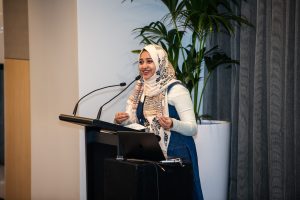
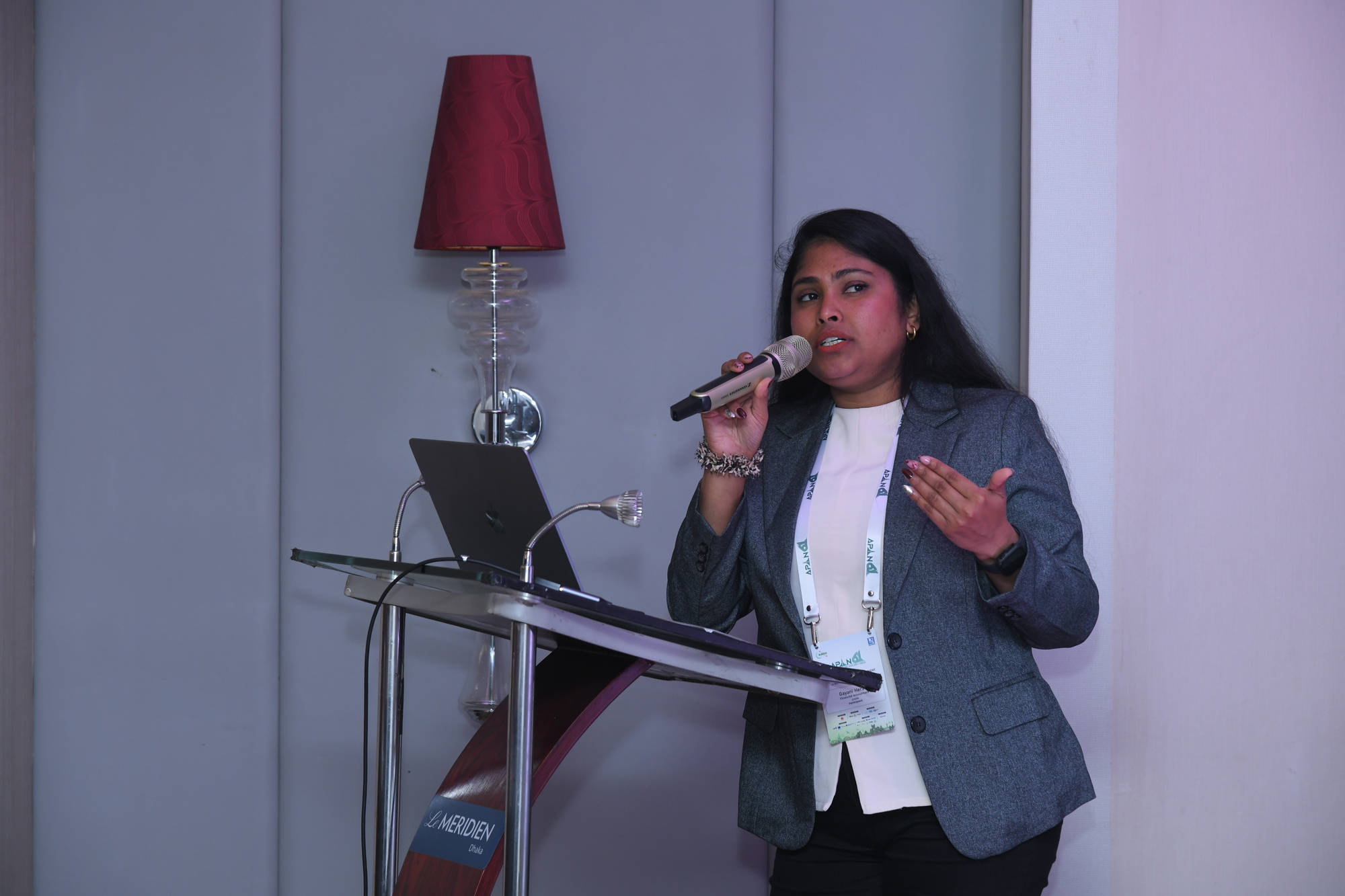
I delivered a presentation titled:
“From Spreadsheets to Smart Assistants: The GenAI Leap in Finance.”
The session demonstrated how Generative AI can:
- Automate repetitive administrative and financial processes
- Improve efficiency and analytical capacity
- Empower non-technical professionals to adopt AI responsibly
- Support institutional digital transformation
This presentation reinforced an important insight: AI adoption within NRENs must extend beyond technical departments. Institutional sustainability depends on equipping administrative and operational teams with AI literacy.
- Learning Through Leadership Engagement
Throughout APAN61, I closely engaged with:
- Dr. Asitha Bandaranayake – CTO, LEARN (HPC/AI Chair)
- Prof. Roshan Ragel – CEO, LEARN
- Dr. Pramila Gamage – Senior Lecturer, UoP, AI Trainer
- Liana Jacinta – General Manager, APAN
- Representatives of Emerging NRENs
From these engagements, I gained insights into:
- Regional AI infrastructure roadmaps
- Capacity gaps in developing NRENs
- Sustainability and governance challenges
- The importance of equitable AI deployment
A recurring theme across sessions was that technological advancement must reduce inequality rather than widen it.
This insight significantly shaped my proposal focus.
- Identified Structural Gap: Higher Education Access
Despite rapid progress in digital infrastructure and AI capability across the Asia-Pacific region, access to higher education remains structurally unequal.
According to UNESCO data, tertiary enrollment rates remain significantly lower in developing regions compared to advanced economies. Financial barriers, geographic distance, and limited institutional capacity continue to exclude capable learners from formal higher education pathways. The World Bank also identifies affordability and indirect costs as key constraints to tertiary participation, particularly for rural and economically disadvantaged populations.
Traditional higher education systems are still largely dependent on:
- Physical campus attendance
- Semester-based progression
- Faculty-intensive instruction
- Centralized examinations
This model does not adequately accommodate:
- Working adults
- Rural and remote learners
- Individuals with financial constraints
- Students unable to commit to regular physical attendance
In several Asia-Pacific economies, there is increasing recognition that literacy including digital and AI literacy must be strengthened at all levels. During discussions with colleagues from the region, including education-focused professionals, it became evident that institutions are actively exploring ways to ensure that at least one member within teams possesses strong digital competency to support broader organizational transformation. This reflects a wider regional understanding that literacy, especially in emerging technologies, is foundational to national development.
However, while efforts are being made to strengthen literacy within existing institutional frameworks, the structure of higher education delivery itself remains largely unchanged.
Even at the international level, higher education continues to follow a conventional pathway:
- Completion of secondary education
- Physical enrollment in a university
- Attendance-based lectures
- Completion of a structured degree over a fixed period
Although online learning platforms and open universities exist, there is still no widely adopted, AI-integrated virtual framework that enables students to pursue accredited, competency-based degree pathways in a fully distributed and scalable manner.
This reveals an underexplored opportunity:
There are potentially large numbers of learners who are capable, motivated, and willing to pursue higher education but are constrained by structural limitations of traditional models. With the advancement of Generative AI particularly in personalized tutoring, automated feedback, adaptive learning, and multilingual support the possibility of an AI-supported virtual higher education pathway is becoming technically feasible.
To date, discussions within APAN have strongly emphasized infrastructure, HPC collaboration, and AI research capacity. However, the systematic exploration of AI-enabled alternative higher education pathways, especially for underserved learner groups has not yet been a central focus.
This gap presents a strategic opportunity for APAN to extend its impact beyond infrastructure enablement toward inclusive educational access enabled by AI and NREN collaboration.
- Proposed Contribution: AI-Enabled Alternative Higher Education Pathways
If an Education Working Group is formed at APAN62, I propose exploring the development of an AI-Supported Distributed Higher Education Framework designed to expand access for non-traditional learners.
This proposal builds upon insights from:
- HPC/AI Working Group discussions
- Emerging NREN capacity challenges
- AI for Development themes
- My ongoing AI training engagements
Core Components:
- AI Learning Companion Layer
- Generative AI tools aligned with curriculum frameworks
- Personalized learning guidance
- Automated formative feedback
- Multilingual academic support
- Scalable support addressing faculty shortages
- Modular & Competency-Based Learning
- Stackable micro-credentials
- Competency-based progression rather than attendance-based
- Digital portfolio assessment
- Flexible pathways for working learners
- NREN-Backed Institutional Validation
- Participating APAN member institutions validate modules
- Secure credential verification using NREN infrastructure
- Exploration of cross-border recognition models
This framework would complement not replace traditional universities. It leverages AI and NREN infrastructure to support learners currently excluded from formal pathways.
- My Role in Supporting This Initiative
Given my interdisciplinary experience, I can contribute by:
- Help to design AI literacy modules for educators and administrators
- Supporting pilot implementations in Sri Lanka through LEARN
- Integrating AI-supported learning models within university training environments
- Contributing to governance discussions on responsible AI in education
- Supporting coordination and operational aspects of working group activities if required
Sri Lanka, through LEARN and ongoing AI training collaborations, could serve as a pilot environment for structured exploration.
- Conclusion
APAN61 strengthened my understanding of how infrastructure, AI capability, and governance must evolve together to create equitable impact.
Through my engagement in the HPC/AI Working Group, prior participation in APAN59 and the AP-GAINED initiative, active involvement in organizing APAN56 in Sri Lanka, and my ongoing AI training initiatives, I have identified a meaningful pathway to contribute to APAN’s future direction. In addition, I had a valuable discussion with Fatima Khanam from Bangladesh, whose background in education provided important insights into how we can collaboratively strengthen the education sector across the Asia-Pacific region through APAN’s platform.
I remain committed to:
- Active participation in APAN working groups
- Strengthening AI literacy across institutional functions
- Supporting the formation of an Education Working Group
- Contributing to AI-enabled, equitable higher education pathways in the Asia-Pacific region
I sincerely thank the APAN Fellowship Committee, the Local Organizing Committee, and APAN leadership for this invaluable opportunity.
I look forward to continued engagement at APAN62 and beyond.

Author: Gayani Herath, Lanka Education And Research Network (LEARN)