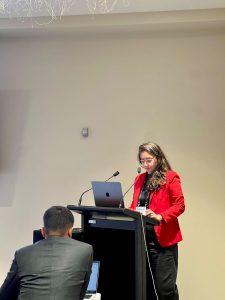
A submarine fiber optic cable through the Arctic to connect Asia and North America! Robotic telesurgery between Japan and Singapore! And AI agents solving complex client problems for network providers? These are just a few of the network innovations discussed in APAN59. But, not all discussions are purely technical. We also had other interesting conversations. For example, what is common between Sudan and the Philippines besides hot summer and lack of identity federation? We have fun covid resisting Transportations. (Hint: Tricycles and Rakshas)
Learning about APAN
I am a recent APAN fellow, and I will be sharing my experience in APAN59.
The APAN59 meeting spanned five days, from March 3rd to March 7th, 2025, in the vibrant city of Yokohama, Japan. Luckily, the cold, windy, and rainy weather left us no choice but to enjoy the warmth of the Pacifico Yokohama building while attending all APAN sessions. Otherwise, it was very tempting to do some sightseeing in the breathtaking bay area, just a few meters away from the venue.
As fellows, we were asked on the first day about what we thought APAN was. Well, everyone knows that the Asia Pacific Advanced Network(APAN) is an international partnership of National Research and Education Networks (NRENs). It’s written here. But, during the five days of the APAN59 meeting, I came to understand what APAN is.
A Glimpse of the APAN59 Program
APAN59 included various sessions, workshops, and panel discussions. The topics covered AI-driven networks, network engineering, Identity federation, security, IoT, cloud, and agriculture. These sessions were led by working groups of experts from industry and academia, as well as young researchers. The fully equipped rooms of the venue were filled with interactive discussions, while the halls echoed with lively networking conversations.
The Threats to Connectivity and APAN Solutions
I was particularly interested in the AI and network sessions. I was not alone as these sessions had the most full rooms. They covered all layers, from wired connectivity through IPv6 address management to AI applications. The speakers discussed innovative ideas for real networking problems. Fiber cuts that threaten our internet connections, latency that makes telesurgeries impossible, and the sustainability of AI, which enables us to use it with more ease of mind. Still, the level of expertise and knowledge sparked my curiosity about other topics, and I attended some engaging sessions, such as those on drone usage and agriculture. My colleagues would often ask me if I was in the right room, given my expressed enthusiasm about the networking field.
Additionally, several vendors showcased their cutting-edge technologies in cybersecurity and AI network operations. One demonstration featured post-quantum encryption in online conferencing, showing a live feed of the exhibit area with very low latency for the encryption algorithm. These demos showed the rapid advancement and current state of networking technology.
Becoming a part of the APAN community
There was much more to APAN than I can fit in this article. To conclude, during my participation in APAN, I engaged in discussions, received answers to some pressing questions, exchanged contact information, and formed lasting friendships. The experience not only expanded my knowledge but also highlighted the collaborative nature of the networking field. I learned that APAN is a community of passionate individuals who tackle essential problems and enable innovations in networks—a community that I am happy to have joined. I am deeply thankful for the APAN Fellowship program for the opportunity
So, do you want to experience your APAN? If you are a student or young researcher, consider becoming an APAN fellow and joining this community!

Author: Eilaf MA Babai, Kyushu University