Minhazul Hasan, Fellow, APAN61 | MSc Student, IICT, BUET | Software Engineer (AI/ML), Brain Station 23
DHAKA, Bangladesh — From January 26 to 30, 2026, the Bangladesh Research and Education Network (BdREN) welcomed the global research and education community to Dhaka for the 61st Meeting of the Asia Pacific Advanced Network (APAN61). As a Fellow assigned to cover the HPC/AI Working Group, I had the privilege of witnessing firsthand how the Asia-Pacific region is confronting one of its most pressing technological challenges: building shared, sustainable infrastructure for high-performance computing and artificial intelligence.
Arriving at APAN61
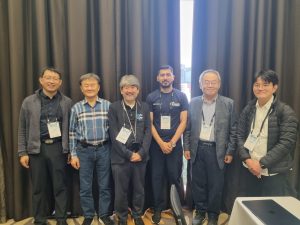
Stepping into Le Méridien Dhaka on the morning of January 26, I was struck by the scale of the operation BdREN had orchestrated. As someone who lives and works in Dhaka, it was a point of genuine pride to see my city hosting a conference of this caliber — the first in-person APAN meeting held in Bangladesh. The logistics were seamless: registration through the MyOrbit platform, synchronized shuttle services, and a venue whose expansive event space accommodated the diverse program of technical sessions, workshops, and community forums with ease. Delegates from across the Asia-Pacific — researchers from Japan, network engineers from Australia, educators from Sri Lanka, AI practitioners from China and Korea — gathered with a shared sense of purpose.
The HPC/AI Working Group: Substance Over Introduction
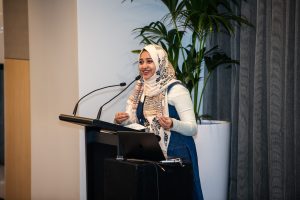
My primary assignment was the HPC/AI Working Group, chaired by Dr. Asitha Bandaranayake of the University of Peradeniya and LEARN, Sri Lanka. The group held sessions on January 26 (11:00–12:30) and January 29, and both proved to be among the most substantive discussions of the entire conference.
APAN61 marked the working group’s third and final year of its initial roadmap. The first two years had focused on establishment — kick-off meetings, communication channels, a white paper, workshops, and hackathons. Now, the conversation had matured. The focus shifted decisively toward publishing research findings, developing policy recommendations, and building frameworks for sustainable HPC-AI infrastructure across the region.
The January 26 session opened with progress reports from member economies. What emerged was a pattern both familiar and instructive: every nation faces some version of the same fundamental challenge — the gap between the AI workloads researchers want to run and the compute infrastructure available to run them. The specifics differ — some economies struggle with basic GPU access while others have national supercomputers but face networking bottlenecks — but the underlying tension is universal.
A recurring theme was the convergence of HPC and AI workloads. Traditional HPC simulations and modern AI training pipelines increasingly compete for the same GPU clusters and high-bandwidth interconnects. Several presenters discussed hybrid approaches where machine learning models accelerate or replace computationally expensive simulations, reducing brute-force compute requirements while maintaining scientific rigor. As someone who works professionally on AI/ML systems at Brain Station 23, this resonated deeply — the principle of using intelligent algorithms to reduce computational overhead is a practical necessity, not just an academic exercise.
The January 29 session shifted toward policy and collaboration. Discussions centered on how APAN member networks could facilitate shared computing resources across borders — a federated HPC fabric where a researcher in Bangladesh could access GPU clusters in Korea or Japan through their national research network. The technical challenges are significant — latency, data transfer, security, governance — but the alternative of every nation independently building world-class HPC facilities is neither feasible nor necessary. The working group’s focus areas — drug discovery, climate modeling, disaster preparedness, precision agriculture, and AI-powered diagnostics — are urgent, lived realities for the Asia-Pacific, not abstract research topics.
Beyond HPC/AI: The Broader Experience
While the HPC/AI Working Group was my primary focus, APAN61’s cross-pollination of ideas was one of its greatest strengths. The AI-driven Networks sessions explored how machine learning can optimize network management and predict failures — capabilities that directly support high-throughput research networking. The Security Working Group’s discussions on quantum-safe technologies served as a reminder that infrastructure built today must be resilient against tomorrow’s threats.
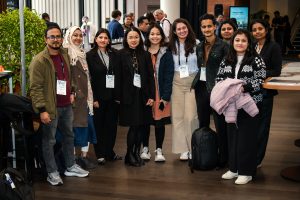
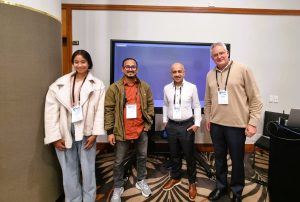
The networking events were equally valuable. I had extended conversations with fellows from Nepal, Mongolia, the Philippines, and Sri Lanka — each bringing perspectives shaped by their nation’s unique challenges. What struck me was how openly delegates discussed not just successes but failures and systemic hurdles. This transparency is APAN’s most underappreciated asset.
A Pivotal Moment for Bangladesh
The timing of APAN61 was significant beyond symbolism. Bangladesh’s draft National AI Policy 2026–2030 explicitly calls for a National AI Compute Strategy — including phased GPU cluster upgrades and participation in Asia-Pacific research computing initiatives. A UNESCO AI Readiness Assessment from late 2025 identified GPU scarcity as a key infrastructure gap. BdREN itself has evolved from a modest university networking project in 2009 to an organization connecting 195+ institutions across a 3,000+ kilometer backbone, now offering HPC, GPU computing, eduroam, and cloud services.
Yet the gaps remain real. Bangladesh has no national supercomputer. Researchers at institutions like BUET — where I am pursuing my MSc at IICT — routinely face computational bottlenecks. The HPC/AI Working Group’s vision of federated cross-border computing is not a theoretical nicety for Bangladesh. It is a potential lifeline.
Closing Reflections
APAN61 was more than a conference. For Bangladesh, it was a statement of arrival on the regional research networking stage. For me personally, it connected my daily work in AI/ML engineering with the larger ecosystem that makes such work possible. The connections forged in Dhaka are not endpoints — they are the beginning of collaborations I am determined to make productive.
I extend my sincere gratitude to BdREN for exemplary hosting, to the APAN Fellowship Committee for the opportunity, and to Dr. Bandaranayake and the HPC/AI Working Group for sessions that were both intellectually challenging and practically grounding.

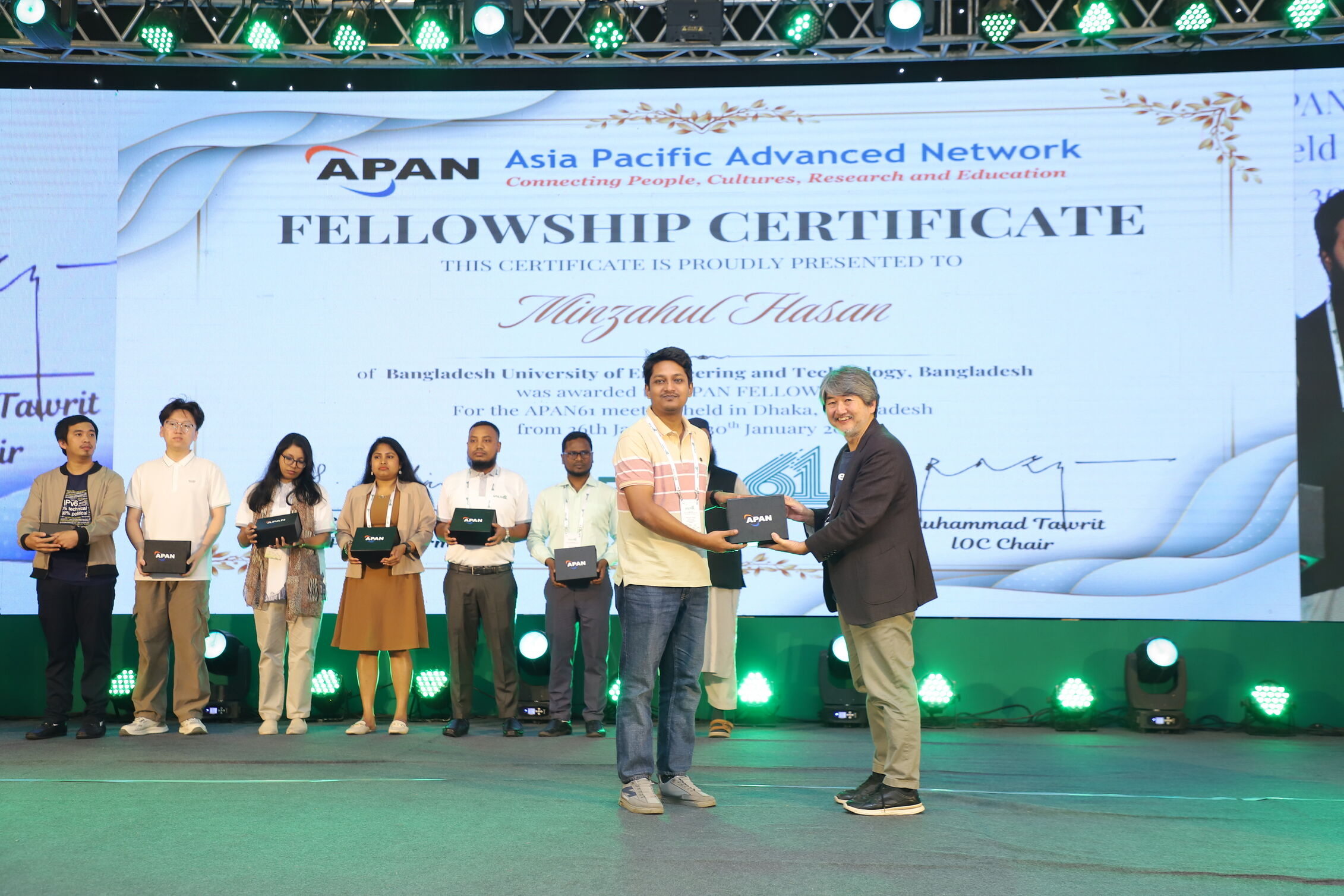
Author: Minhazul Hasan, BUET IICT / Brain Station 23