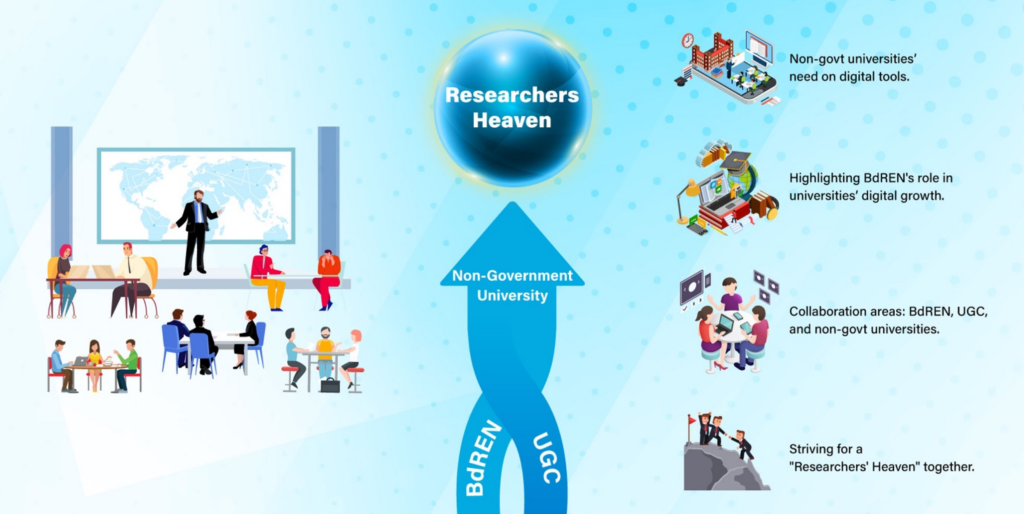
In the heart of Dhaka, amidst the vibrant academic landscape of Bangladesh, BdREN (Bangladesh Research and Education Network) and the Private University Division of the University Grants Commission (UGC) came together to host a landmark workshop aimed at understanding the needs and aspirations of non-government universities across the country.
The bustling auditorium of the University Grants Commission (UGC) in Dhaka vibrated with anticipation. Representatives from 32 prestigious non-government universities (NGUs) sat shoulder-to-shoulder with the team from the Bangladesh Research and Education Network (BdREN). The air crackled with a shared purpose: to bridge the gap between the needs of academic institutions and the advanced services offered by BdREN. This wasn’t just any workshop. It was a strategic collaboration between BdREN and the UGC’s private university division, aiming to tailor solutions and ensure equitable access to cutting-edge resources for all universities in Bangladesh that need to thrive in the 21st century.
The day unfolded like a symphony of knowledge exchange. The workshop kicked off with a warm welcome from the organizers, setting the stage for a day of vibrant and insightful discussions and collaborative problem-solving. BdREN officials, led by the ever- enthusiastic Chief, painted a vivid picture of their capabilities: high-speed internet, cloud computing, e-learning platforms, and access to international research databases. They showcased the benefits of high-speed internet connectivity, access to digital resources, and collaborative research opportunities enabled by BdREN’s network. Each presentation was punctuated by fervent questions from the NGU representatives, their faces reflecting a mix of curiosity and hope.
Next, representatives from the Private University Division of UGC shared insights into the regulatory landscape and government initiatives to support non-government universities. They emphasized the importance of collaboration between academia, government, and industry to drive innovation and excellence in higher education.
With the stage set, it was time for interactive sessions where participants could voice their opinions and share their experiences. Breakout groups were formed to discuss specific topics such as internet bandwidth requirements, digital library access, access to specialized software, cloud services, and cybersecurity needs. Facilitators encouraged open dialogue and brainstorming, fostering a spirit of collaboration and partnership.
Throughout the day, participants engaged in lively discussions, sharing their challenges, aspirations, and recommendations for improving digital infrastructure and services for non-government universities. They highlighted the need for reliable internet connectivity, affordable access to digital resources, and capacity-building initiatives to enhance digital literacy among faculty and students. The demands were varied and specific.
BdREN listened intently, taking meticulous notes and engaging in open discussions. They didn’t shy away from acknowledging limitations but emphasized their commitment to finding creative solutions. The atmosphere was collaborative, fueled by a shared desire to empower Bangladesh’s academic landscape.
The culminating moment arrived with the feedback session. Participants were asked to not only articulate their service demands but also propose associated price points. This transparent approach fostered a sense of ownership and ensured that solutions are aligned with both NGU needs and BdREN’s sustainability.
As the workshop drew to a close, BdREN and the Private University Division of UGC expressed their gratitude to the participants for their valuable insights and contributions. They pledged to take the feedback received during the workshop into account while shaping future initiatives and services for non-government universities. The NGU delegates departed, not just with a clearer understanding of BdREN’s offerings, but also with the hope of a future where advanced resources were no longer out of reach.
From the workshop, BdREN summarized the demand depicted below:

This workshop wasn’t just a one-time event; it marked the beginning of a collaborative journey. BdREN, with its dedication to inclusivity and innovation, promised to analyze the feedback and create customized service packages for NGUs. The private university division of UGC, acting as a bridge, pledged to facilitate communication and ensure transparency throughout the process.
In the weeks following the workshop, BdREN and the Private University Division of UGC worked closely to analyze the feedback received and develop actionable recommendations. They conducted one by one follow-up meetings with workshop participating universities to validate their findings and prioritize initiatives based on the identified needs and demands.
Ultimately, the workshop served as a catalyst for collaboration and partnership between BdREN, the Private University Division of UGC, and non-government universities in Bangladesh. It laid the foundation for a strategic roadmap to enhance digital infrastructure and services, empowering non-government universities to excel in teaching, research, and innovation in the digital age. Through collaboration and collective action, BdREN and its partners are paving the way for a brighter future for higher education in Bangladesh.
As the story unfolds, one thing is certain: the BdREN-NGU workshop has planted the seeds for a more equitable and empowered academic landscape in Bangladesh. By bridging the gap between needs and solutions, this collaboration has the potential to unlock a new era of research, innovation, and learning for generations to come.