By Roshan Ragel
Consulting CEO, LEARN
In today’s interconnected world, National Research and Education Networks (NRENs) are vital in driving innovation and collaboration across the Asia-Pacific region. These institutions are at the forefront of supporting research and education but face shared challenges—whether it’s upgrading digital infrastructure or adapting to emerging technologies like Generative AI (GenAI). To address these hurdles collectively, the REN Leaders Forum was launched at APAN as a platform for NREN leaders to connect, share insights, and shape the future of research and education in the APAC region. Held twice a year at APAN meetings, the REN Leaders Forum brings together C-level executives and decision-makers from NRENs for strategic discussions. It has become a cornerstone for regional collaboration, providing a unique space for shared learning and innovative problem-solving. By fostering these high-level conversations, the forum strengthens ties and empowers NRENs to tackle challenges together, paving the way for progress and innovation.
APAN56: Establishing the Foundation for Strategic NREN Collaboration
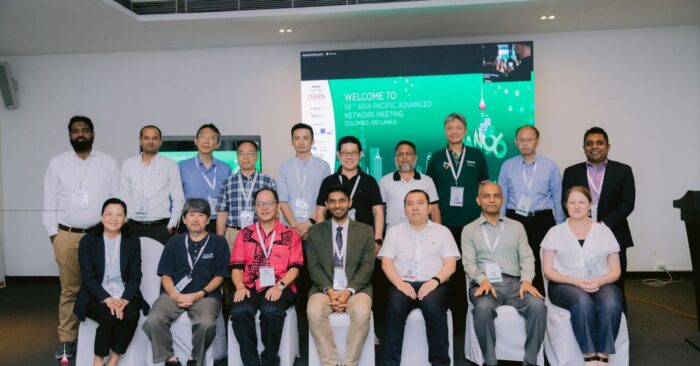
The first REN Leaders Forum at APAN56, held in Colombo, Sri Lanka, was pivotal for fostering collaboration among NRENs in the Asia-Pacific region. Led by the CEO of LEARN, Prof. Roshan Ragel, the forum brought together top executives and decision-makers to tackle the challenges, opportunities, and trends shaping the future of NRENs. This inaugural session laid the groundwork for ongoing discussions, highlighting the value of collective problem-solving and regional cooperation to address shared goals.
One of the key moments at the forum was the introduction of the NREN Maturity Model by Mohammad Tawrit, CEO of BdREN. This framework offers a detailed tool for assessing NREN capabilities across 13 key areas, including financial sustainability, service offerings, and infrastructure strength. Tawrit highlighted the model’s universal relevance, pointing out that even mature NRENs could benefit from its insights. The presentation sparked valuable discussions among the participating REN leaders. They shared perspectives on how the model could guide their development, identifying critical gaps such as shortages in expertise and the need to diversify funding sources to reduce reliance on government support. These exchanges underscored the forum’s spirit of collaboration, encouraging REN leaders to explore strategies for capacity building and promoting gender diversity within their networks.
Afterwards, the President of SingAREN, Dr. Francis Lee Bu Sung, took the theme of collaboration further by introducing the “3 C’s of Collaboration”—Communication, Coordination, and Cooperation. He shared inspiring examples of regional partnerships, such as Asi@Connect and the Japan-Singapore climate research initiatives, to illustrate how cooperation can amplify impact across NRENs. These discussions also highlighted the importance of visibility and financial sustainability, encouraging NRENs to strengthen their value propositions and explore innovative funding strategies. Later, panel discussions tackled key topics such as gender diversity, noting that only 30% of the region’s NREN workforce consists of women—a gap that needs to be addressed. Another area of focus was the importance of capacity-building initiatives and sharing best practices to enhance local and regional collaboration efforts.
APAN57: Discussing the Possibilities and Challenges of GenAI
The REN Leaders Forum at APAN57 in Bangkok continued the momentum as a vital platform for regional collaboration and tackling shared challenges among NRENs. This session focused on the transformative potential of GenAI and advancing key initiatives to strengthen cooperation. The discussions began with a keynote by the Director of Worldwide Education at Microsoft, Amit Pawar, who shared how AI can revolutionise education. Using real-world examples from institutions like the University of Michigan and California State University San Marcos, Pawar showcased how AI can personalise learning, enhance accessibility, and improve operational efficiency. These examples highlighted the immense opportunities GenAI offers in education and research—from addressing equity gaps and streamlining workflows to equipping students with essential AI literacy skills for the future.
Following the keynote, participating REN leaders shared updates on their GenAI initiatives. PERN from Pakistan highlighted its ongoing work on developing GenAI usage policies for higher education. LEARN shared its strategic use of GenAI for planning and operational efficiency and the 4-day GenAI workshop it organised in March 2024 alongside the UNESCO Chair of the Asia Pacific University (APU). Despite these promising developments, recurring challenges emerged throughout the discussions. Participating REN leaders identified cost barriers, resistance to adopting new technologies, and the lack of localised AI tools as significant hurdles to wider GenAI adoption. By the end of the session, there was a consensus on the need for capacity-building programs to equip the region with the skills and resources necessary to implement GenAI solutions effectively.
APAN58: Advancing GenAI Collaboration and Regional Capacity Building

The APAN58 REN Leaders Forum in Islamabad focused on the transformative power of GenAI in empowering NRENs across the Asia-Pacific region. Bringing together representatives from member NRENs, the forum served as a collaborative space to tackle shared challenges, share insights, and explore innovative ways to integrate GenAI into research, education, and administrative operations. The session began with the presentation of a survey titled “GenAI for NREN Empowerment,” conducted among NREN personnel before the forum. The survey shed light on major barriers to GenAI adoption, such as the high cost of tools, the limited availability of localised language models for non-English-speaking communities, and significant gaps in training and expertise among NREN staff. These findings underscored the urgent need for capacity-building programs to equip NREN teams with the skills necessary to harness the full potential of GenAI.
Building on these insights, REN leaders proposed practical strategies to address the barriers to GenAI adoption. A key focus was the importance of regional collaboration. By pooling resources, NRENs could lower costs, share infrastructure, and develop localised AI tools tailored to the diverse regional needs. These ideas were supported by examples shared during the discussions: Korea’s progress in creating AI tools to simplify access to scientific papers, PERN’s efforts to develop ChatGPT usage policies for education, and LEARN’s strategic use of GenAI to improve planning and operational efficiency. The session also highlighted the critical role partnerships play in driving progress. LEARN announced its capacity-building workshops, created in collaboration with the UNESCO Chair of the Asia Pacific University (APU) in Malaysia, to tackle training gaps and encourage GenAI adoption across the region. These initiatives demonstrate how partnerships between NRENs and global organisations can close gaps in knowledge and infrastructure, making integrating AI technologies both achievable and sustainable.
Charting the Future: The Impact and Vision of the REN Leaders Forum
The REN Leaders Forum has become a key platform for collaboration and innovation among NRENs across the Asia-Pacific region. Since its launch at APAN56, where the NREN Maturity Model was introduced to evaluate and strengthen NREN capabilities, the forum has consistently tackled critical challenges while promoting collective solutions. At APAN57, the focus shifted to exploring the potential of GenAI and celebrating the launch of SEACREN, further advancing the forum’s mission. APAN58 built on these efforts by prioritising capacity building and regional collaboration to bridge gaps in skills, infrastructure, and access to AI technologies. The REN Leaders Forum has shown the transformative power of a shared vision and mutual support through collaborative initiatives. As it continues to grow, the REN Leaders Forum is poised to shape the future of NRENs by addressing emerging challenges, fostering inclusivity, and enabling sustainable development. By uniting leaders and stakeholders in a common mission, the REN Leaders Forum remains a vital platform for creating a more connected and innovative future for research and education across the Asia-Pacific region.