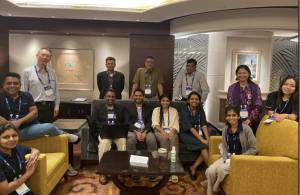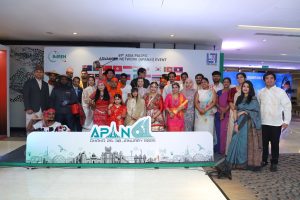
The E-Culture Working Group (WG) at APAN60 convened on July 30, 2025, at the Grand Hyatt Hotel, Hong Kong, bringing together global experts, innovators, and artists to discuss how technology continues to reshape culture, education, and society. Held across two sessions at the scenic Pool house, 11th Floor, the event provided a platform to exchange ideas, showcase research, and build collaborations around the theme of digital transformation in the humanities and arts.
About the E-Culture Working Group
The E-Culture WG of APAN plays a pivotal role in advancing the application of ICT in Arts, History, Humanities, and Social Sciences. Its mission is to foster research and education initiatives that enrich cultural understanding, promote digital inclusion, and generate meaningful societal outcomes. Through collaboration and innovation, the group connects artists, technologists, and educators to explore how digital tools can preserve heritage, amplify voices, and inspire creativity in an interconnected world.
Highlights of the Session
The E-culture sessions in APAN60 featured ten diverse and forward-looking presentations reflecting how digital technologies are transforming creative practice, heritage preservation, and social well-being.
Session 1:
- Clara Baringo Fonseca (RNP, Brazil): Making Indigenous Biodiversity Data Available in Brazil: Use Cases and Challenges in Implementing the CARE Principles emphasizing ethical and inclusive data governance and applying CARE Principles to biodiversity data sharing.
- Natasha Best (The Australian National University): Wakaman Language Revitalisation Project — combining digital documentation and community collaboration to preserve Indigenous languages and cultural identity.
- Ihtesham ul Islam (NUST, Islamabad): AI-Driven Early Prediction of Gestational Diabetes – showcasing how artificial intelligence can revolutionize maternal healthcare across South Asia by enabling early diagnosis, personalized care, and data-driven decision-making, while also helping societies transition from conventional healthcare practices to more technology-empowered, culturally adaptive systems.
- Muhammad Abdullah (Multimedia University): PULSEWISE Project a platform for real-time health monitoring, linking ICT and wellness for public benefit
- Mariko Kobayashi (ARENA-PAC): Asia-Pacific Networks Power Live 3D Video Performance, showcasing cross-border creative collaboration using advanced research
Session 2:
- Adam Bell (AARNet): Preserving Born Digital Heritage — exploring emulation infrastructure for archiving and sustaining digital-born culture.
- Naira Kocharyan (SCI, Armenia): Digitizing Armenia’s Cultural and Scientific Heritage – highlighting global collaboration and open-access archives.
- Farrukh Arif (NED UET, Karachi): Immersive Futures — exploring VR and AR for new cultural and educational experiences.
- Shrikant Bhalerao (University of Hyderabad): Reimagining Performance Learning advancing open access and digital collaboration in theatre education.
- Zainurul Rahman: Showcasing Past Cyber Performance Activities — celebrating creative collaboration among NRENs in e-culture projects.
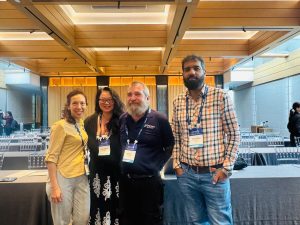
A Shared Vision for Cultural Innovation
The E-Culture Working Group session at APAN60 reaffirmed its commitment to connecting technology with humanity. Across all presentations, a shared narrative emerged that is one of inclusivity, collaboration, and creative empowerment through digital innovation. By integrating emerging technologies with cultural values, the e-Culture community continues to demonstrate that technology is not just a tool, but a bridge linking people, ideas, and traditions across the Asia-Pacific and beyond.
Join the Group
The E-Culture WG welcomes researchers, artists, technologists, and educators to participate in ongoing initiatives. For speaker details, abstracts, and collaboration opportunities, visit the official APAN Website (apan.net) or email at [email protected].